
Tips to Setting & Keeping Professional Boundaries for School Nurses
One of the biggest lessons I've learned over the years is that being a great school nurse doesn't mean saying "yes" to everything.
Early in my career, I wanted to help everyone. If someone asked, I said yes. If there was another task that needed to be done, I tried to fit it in. Like many school nurses, I thought working harder was the answer.
Over time, I realized something important.
Setting professional boundaries isn't about doing less. It's about protecting your time, energy, and clinical judgment so you can continue providing excellent care to the students who need you most.
Healthy boundaries don't make you less caring—they help you build a long, rewarding career in school nursing.
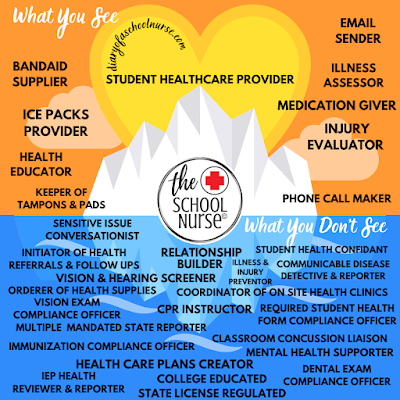
5 Key Tips for Setting and Keeping Professional Boundaries
1. Know Your Role
-
Make sure staff and administration understand your role as a school nurse.
-
Set expectations on what falls within your scope of practice—and what doesn’t.
-
Politely redirect requests that don’t align with your responsibilities.
Too often, school nurses are expected to take on extra tasks simply because they’re available. Clearly communicating your role helps prevent being pulled into non-nursing duties.
2. Protect Your Time
-
Establish clear working hours and avoid responding to emails or calls outside of them.
-
Let staff know when and how they should contact you for non-urgent matters.
-
Take your breaks and lunch—your time to recharge is just as important as anyone else’s.
Many school nurses struggle with stepping away, but setting limits on your availability is crucial. If you’re always available, people will always expect you to be.
3. Learn to Say No (Without Feeling Guilty!)
-
Recognize that saying no doesn’t make you unhelpful—it makes you more effective.
-
Use professional but firm language when declining extra responsibilities.
-
Offer alternative solutions if appropriate, like directing someone to the right resource.
Saying no is often uncomfortable, especially in a school setting where teamwork is key. But protecting your time and energy ensures you can focus on the students who need you most.
4. Protect Your Emotional Energy
-
Be mindful of becoming too personally involved in student or staff issues.
-
Keep your interactions professional and avoid taking on emotional burdens that aren’t yours to carry.
-
Protect student privacy by following FERPA and HIPAA guidelines.
It’s natural to care deeply about your students, but setting emotional boundaries prevents compassion fatigue. You can support students while still maintaining a healthy separation.
5. Advocate for Yourself
-
Speak up when your workload becomes unrealistic.
-
Request policy support from administration regarding boundaries.
-
Connect with other school nurses for guidance and encouragement.
Remember, advocating for yourself isn't selfish—it's one of the best ways to protect the future of school nursing in your building.
Final Thoughts: Boundaries Help You Thrive
Looking back over my career, I can honestly say that some of the best decisions I made weren't about becoming a better clinician—they were about learning to protect my time, my energy, and my role as a school nurse.
You don't have to solve every problem.
You don't have to carry every burden.
And you certainly don't have to do everything alone.
The students who need you tomorrow also need you to take care of yourself today.
Healthy boundaries aren't a luxury—they're part of becoming a successful school nurse.
.png "Nurse Professional boundaries. Why do school nurses set professional boundaries? What are some examples of professional boundaries for school nurses.")
.png "How does school nurse Brandi decorate and organize her office? Take a look at these school nurse office pictures to find out. Elementary school nurse")

.png "Discover essential self-care strategies for school nurses, including stress management, work-life balance, and setting healthy professional boundaries")
.png "Discover essential self-care strategies for school nurses, including stress management, work-life balance, and setting healthy professional boundaries")

.png "How does school nurse Brandi decorate and organize her office? Take a look at these school nurse office pictures to find out. Elementary school nurse")
.png)
.png)

No comments:
Post a Comment