Hopefully Helpful School Nurse Tip: Many school nurse enjoy creating "Meet the School Nurse" letters for the beginning of the year. Guess what? I'm not one of them, but I wrote this blog post for those of you who are :)
Why create a Meet The School Nurse Letter
There are quite a few reasons that creating a Meet The School Nurse letter is an excellent idea. I just don't do it because I use this instead!
However, many school nurses prefer a simplified one page meet the school nurse letter and hear are a few excellent reasons why!
First, an "about me" welcome to school letter can help establish a positive relationship between the school nurse and the students and their families. By sharing some personal information, such as hobbies, interests, and background, you can create a more approachable and friendly persona, which can help put students and families at ease.
Second, this type of letter can help communicate the school nurse's nursing background and student health goals for the school year. This is a great time to outline some of the key objectives of the nurse's office, office expectation, medication guidelines, and can help students and families understand what the school health requirements are, what can be expected during a nurse office visit, and when / how to expect to receive future communication from you.
Finally, an "about me" letter can help build a sense of community. By sharing some information, the school nurse can encourage students and families to share their health concern & questions, which can help foster a sense of belonging and connection.
Are you interested in a Meet The School Nurse letter?
If you're creative and have some free time then you can create your own templates. If you're trying to save time or lost all your creativity because you're to focused on collecting school physicals (!) then I've listed some editable options for you below!
Helpful School Nurse Tip: An Individualized Healthcare Plan (IHP) doesn't have to be perfect. Think of it as a working nursing document that grows with the student and changes as their healthcare needs change.
IHP Overview
Individualized Healthcare Plans (IHPs) have been part of school nursing practice for decades and remain one of the most important tools school nurses use to provide safe, individualized care for students with complex health needs.
Real quick—the terms "health care" and "healthcare" are often used interchangeably, but there is a subtle difference between the two.
The phrase health care typically refers to providing medical services to treat illness or injury, while healthcare is a broader term that includes promoting health, preventing illness, and supporting overall well-being.
That distinction is important in school nursing.
An Individualized Healthcare Plan isn't simply a document about treating a medical condition. It helps organize the nursing care, health promotion, accommodations, and interventions a student may need to safely participate in the school day.
Based on the nursing process and developed by the school nurse, an IHP is written by the school nurse, for the school nurse. It serves as the nursing foundation from which other school health documents—such as Emergency Action Plans (EAPs), staff procedures, accommodations, and communication tools—may be developed to support a student's health, safety, and academic success.
Because school nursing practice varies from state to state, every IHP should be developed in accordance with your state's Nurse Practice Act, school nursing standards, district policies, and current evidence-based practice.
The National Association of School Nurses (NASN) describes the role of the school nurse this way:
"It is the position of the National Association of School Nurses (NASN) that the registered professional school nurse (hereinafter referred to as school nurse) initiates and develops an Individualized Healthcare Plan (IHP) for students whose healthcare needs require more complex school nursing services. An IHP is a plan of care written by the registered nurse for students with or at risk for physical or mental health needs (ANA & NASN, 2017). It is the responsibility of the school nurse to annually evaluate the IHP, as well as to update the plan if deemed appropriate, to reflect changes in the student’s healthcare needs and address nursing interventions and/or student healthcare outcomes."NASN, 2023 IHP Position Statement
Individualized Healthcare Plans vs. Emergency Action Plans
One of the biggest misconceptions new school nurses have is believing that the Individualized Healthcare Plan should be shared with everyone who works with the student.
In reality, the IHP is a nursing document that guides nursing assessment, planning, interventions, and evaluation.
Most school staff don't need the entire IHP.
Instead, they typically need Emergency Action Plans (EAPs), school procedures, accommodations, or specific health instructions that clearly outline what to do, when to respond, and who to contact during a health event.
Providing the right information to the right people helps protect student privacy while ensuring staff are prepared to respond confidently when needed.
As school nurses, we play an important role in promoting best practices—protecting confidentiality while helping create a safe and supportive learning environment for every student.
Writing Your First Individualized Healthcare Plan
Writing your first Individualized Healthcare Plan can feel intimidating, but it gets easier with practice.
Remember, your goal isn't to create the perfect IHP—it's to create a nursing plan that clearly guides the care your student needs during the school day.
Every district has different expectations, so use your state's Nurse Practice Act, district policies, and school nursing standards to guide your documentation.
Over the years, I've created editable IHP templates to help school nurses spend less time formatting documents and more time focusing on student care. Each template is fully editable and can be customized to fit your district's needs.
Templates provide a starting point—not a finished product. They help ensure you don't overlook important information while still allowing you to individualize each student's plan.
As my resource library continues to grow, I'm also creating condition-specific Individualized Healthcare Plans for some of the health conditions school nurses encounter most often.
Current templates include:
Asthma
Seizure Disorders
POTS
More templates are added as they're completed.
Continue Learning
If you're interested in learning more, these resources may also be helpful:
Hopefully Helpful School Nurse Tip: When planning a school nurse bulletin board, it is important to keep the purpose, audience, timeliness, and interactivity in mind. By doing so, the bulletin board can be a valuable tool for promoting health & wellness within the school community. I don't do bulletin boards, but if I did this post contains some really great ideas!
Things to Consider when Planning a School Nurse Bulletin Board
When planning a school nurse bulletin board, there are several things to consider in order to make the board as informative and engaging as possible for students, staff, and parents. First, consider the purpose of the bulletin board. Is it to provide general health information, promote healthy habits, or educate students about a specific health topic? Once the purpose is determined, it will be easier to choose the appropriate content for the board.
Next, consider the audience. The tone and language used on the bulletin board should be age-appropriate and easy to understand. Use visuals such as pictures, diagrams, and infographics to communicate important health information. Consider the layout of the bulletin board as well. Use headings and subheadings to organize the information and make it easy to follow.
Another important factor to consider is the timeliness of the information. Make sure the content on the bulletin board is relevant and up-to-date. Consider changing the content on a regular basis to keep the board fresh and interesting. This is the exact reason I don't do bulletin boards- I can't promise that I will have time to change it up on a regular basis.
Finally, consider incorporating interactive elements into the bulletin board. For example, include QR codes to reliable websites where students and staff can get more information, maybe have a handout or coloring page related to the health topic that students can take with them. This will encourage students to engage with the content and learn in a fun way.
Bulletin Board Examples & Suggestions from Real School Nurses!
If you're not already a member of The School Nurse Facebook groups then you should be! Join HERE and HERE by answering all of the membership questions :) Both of these groups provide members with the chance to:
Gain insights & inspiration from the personal experiences from other school nurses.
Stay up-to-date on current topics and issues related to school nursing.
Discover creative solutions to common challenges faced by school nurses.
Network with other school nurses who are members of the groups.
Find resources and recommendations for books, conferences, and other professional development opportunities.
Keep abreast of changes in policies and regulations that impact school nursing.
Get tips and advice for managing a caseload of students with diverse health needs.
Learn about best practices for promoting wellness and preventing illness in the school environment.
Be part of a supportive community of school nurses who value ongoing learning and growth.
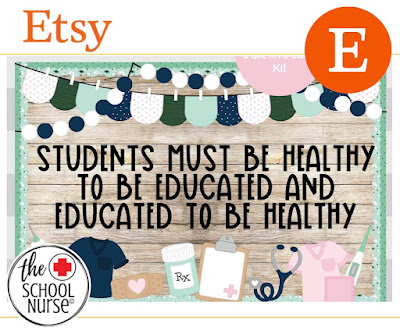
Check out these Fb group posts if you're ready to see bulletin boards created by other school nurses!
Click the images below to view a list of all posts related to bulletin boards within each of these Fb groups! Look within the comments of these posts; many have pictures and some of links too.
.png "Looking for meet the school nurse letter examples? This blog post shared meet the nurse templates found on Etsy and teachers pay teachers.")
.png "Looking for meet the school nurse letter examples? This blog post shared meet the nurse templates found on Etsy and teachers pay teachers.")
.png "Looking for meet the school nurse letter examples? This blog post shared meet the nurse templates found on Etsy and teachers pay teachers.")
.png "Looking for meet the school nurse letter examples? This blog post shared meet the nurse templates found on Etsy and teachers pay teachers.")
.png)


.png "School nurse bulletin board ideas needed. How do other school nurses decorate their office bulletin boards. This blog post has decor ideas for nurses")
.png "School nurse bulletin board ideas needed. How do other school nurses decorate their office bulletin boards. This blog post has decor ideas for nurses")


.png)


.png)