Showing posts with label seizure disorder. Show all posts

Saturday, March 29, 2025

Supporting Students with Seizures in the School Setting

Seizures in the School Setting:

Information for New School Nurses

+ This post contains affiliate links. +


Seizures can feel overwhelming for both students and staff, but with the right knowledge and preparation, schools can create a safe and supportive environment. As the school nurse, it’s essential to be prepared, stay calm, and know how to respond appropriately. One key part of your role is not just managing seizures when they happen, but also educating staff and ensuring everyone knows how to support students with seizure disorders.  According to the Epilepsy Foundation

"Epilepsy is not a rare disorder, 1 in 26 people will develop epilepsy during their lifetime. It can occur on its own or alongside other health conditions of the brain. What happens during a seizure may look different depending on who is experiencing them. However, seizures are usually stereotypic, which means the same things or behaviors tend to occur in a person each time they have a seizure." 

 Understanding Seizures and How They Affect Students

Students with seizure disorders may experience different types of seizures, from brief episodes to more complex situations. It’s important to recognize the signs and know how to provide support. When a seizure occurs, your calm, quick response will set the tone for the entire school community. Staff and students often mirror the school nurse’s reaction, so staying composed will help reassure everyone involved.

Know the Seizure Action Plan

Each student with a seizure disorder should have a Seizure Action Plan in place. This plan outlines what steps to take during a seizure, including emergency medications, whether emergency services should be contacted, and how to ensure the student’s safety. Review plans regularly. If a Seizure Action Plan is not in place, follow your school's policy and procedure guidelines to respond appropriately.

Educate School Staff

Teachers and staff may not have the same medical knowledge as you. As a school nurse, part of your role is to educate them on what to do during a seizure, how to keep the student safe, and how to call for additional help.

General Seizure First Aid – Stay, Safe, Side
  • Stay with the student and time the seizure.
  • Safe – Keep the area clear of hazards.
  • Side – If possible, turn them on their side for safety.
(If a seizure lasts more than 5 minutes, follow the Seizure Action Plan or call emergency services.)

State-Specific Laws and Policies

It’s also important to be aware of state-specific laws and policies that may impact how schools manage seizure disorders. For example, in Illinois, the Seizure Smart School Act requires schools to have Seizure Action Plans for students with epilepsy. It also mandates that schools designate "Delegated Care Aides" who are trained to assist in implementing these plans, ensuring that students receive the appropriate care and support they need during a seizure. Be sure to review your state’s specific laws to ensure compliance and best practices.

Saving Your Time by Using Available Resources

When educating staff, there's no need to reinvent the wheel. Many districts already have seizure protocols in place. You can also use reliable online resources to save time while ensuring your school staff is well-prepared. Here are a few helpful options:

By using these resources, you’ll ensure staff are informed and prepared to support students with seizures in a timely and effective way.

Supporting the Student

Supporting students with a seizure disorder requires proactive planning and education. As a school nurse, you play a vital role in ensuring that both students and staff are prepared to manage seizures safely and effectively. Here are some key ways you can provide support and create a safe environment for students living with epilepsy.

Here’s a brief list of ways school nurses can support students with a seizure disorder at school:

  1. Collect and Maintain Seizure Action Plans (SAPs): Make sure every student with a seizure disorder has a customized Seizure Action Plan, and that it’s reviewed regularly.

  2. Train School Staff: Provide training to teachers, aides, and other school personnel on how to recognize seizures and perform seizure first aid.

  3. Monitor Medication and Health Needs: Track any medication schedules and ensure the student receives the necessary treatments or interventions during school hours.

  4. Educate Students: Help the student understand their condition and what they can do to stay safe at school, empowering them with knowledge about their seizures.

  5. Foster a Supportive Environment: Encourage a school culture that is informed and empathetic to the needs of students with epilepsy, reducing stigma and promoting inclusion.

  6. Ensure Emergency Readiness: Be prepared with emergency protocols for seizure-related crises, ensuring that all staff know when to call for emergency medical help.

  7. Collaborate with Parents and Medical Teams: Maintain open communication with families and healthcare providers to ensure the school is meeting the student’s medical needs.

Closing Thoughts

As a school nurse, you're an essential part of your school’s ability to respond to medical emergencies. By staying calm, educating staff, and using available resources, you help create a safer, more informed school environment for students with seizure disorders. Additionally, providing emotional support and fostering a sense of security for the student can make a significant difference in their school experience. Your proactive approach can make all the difference in how a seizure is handled and how students are supported both medically and emotionally.


 Check out these other popular DOASN blog posts & product links.
SEIZURE DISORDER


Friday, February 18, 2022

Helping Teachers Help Students With Seizures

 Seizures In The School Setting

+ this post contains affiliate links +


Helpful School Nurse Tip In 2001 I was preparing my thesis project for my masters degree. It was then I learned that many teachers were nervous when a student in their class had a known seizure disorder. I created these teacher tips to help teach the teachers what they needed to know about a variety of health conditions in the school setting; even seizure disorders.   


What are Teacher Tips & Why School Nurses should use them?

As nurses, we often take our knowledge for granted. There might even be times when we assume others understand or have a similar knowledge base regarding certain health conditions. However, many times they do not. Since school nurses are often viewed as the medical expert within the school setting one of our roles to educate others. The goal is educate enough so they understand what they need to know about certain medical conditions.


Teacher Tips cards provide an opportunity to educate others within the school on a specific health condition. These digital and partially editable "cards" give broad information on a health condition and allow you to provide more specific details as needed. 

How can you use Teacher Tips?

Many years ago (when email was optional!), I used to print Teacher Tips om paper, write student specific information, and hand deliver to teachers or put them inside their teacher mailbox. Now, I include these digital Teacher Tips digital health information cards within the body of an email message to teachers and/or add them as an IHP attachment in Skyward for a specific student.


EMAIL:  Since the Teacher Tips cards offer broad information, I have the option of including more student specific details within the body of the email; information staff would need to know. I can also include a copy of the 504 Plan or ask teachers to reference the 504 Plan for even more specific information. 


SKYWARD: Use Skyward to your advantage! If you have access to the Skyward Health module then consider uploading the Teacher Tips cards within the Health tab of Skyward Student Management.  Do you know how?

  • Once you have your student screen open select IHP
  • Then “Add File”
  • Enter a form description
  • Then Choose the Teacher Tips file you want to attach (download as a PDF from Google prior to attaching in Skyward)
  • Don’t stop there- Use the Comment box to add student specific information or more detailed information you want to the teacher to be aware of.
This is an excellent communication tool and resource between you and the teachers.  Especially at the 6-8 or 9-12 grade levels when student schedules change mid year or without notice. Do you utilize the Health Condition tab in Skyward? Another great tool and would make for another informational Diary Of A School Nurse blog post!

... Moving on to Teacher Tips for Seizures ...


Teacher Tips for Seizures

Here are some tips when you are looking at items listed for sale on Teachers Pay Teachers; whether it is The School Nurse store or any other store:
  • Read product descriptions carefully so you know what you are purchasing
  • Look at all of the pictures provided of the product- even the product preview pictures
  • Read the reviews and the responses to the reviews
  • Check out the custom categories list the store
  • Start with a FREE TpT product- The School Nurse store offers 17 FREE digital products
The goal is to provide school staff the education and training they need to feel confident they can help a student during a health emergency situation until the school nurse or another trained staff member arrives and can take over care. Many times a seizure is over by the time the nurse arrives and we want school staff to feel comfortable and confident in providing initial care to students.

Teacher Tips related to Seizures in the School Setting

Vagus Nerve Stimulator VNS
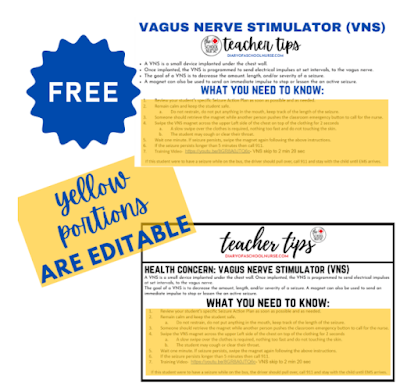
Let's start with the FREE product- the VNS Teacher Tips. It provides a good overview of the other 3 seizure related products & it has a 5 star rating

This is a Google slides product and you will need to allow TpT access to your Google drive. Once available, you'll be able to view the actual product and edit as needed. The wording below each of the yellow areas is fully editable.  

The digital health conditions card provides an easy to understand overview of what a VNS is and includes a "What You Need To Know" section with 7 editable items.  There are links to a sample Seizure Action Plan and a Vagus Nerve Stimulator training video too.  

The product includes the original black / white card and also the newly updated blue font card :)

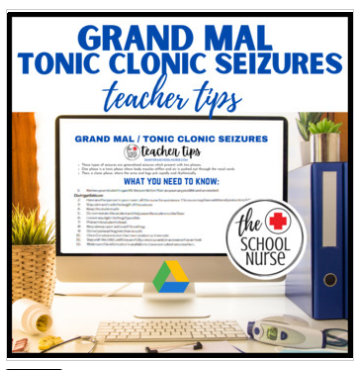
Grand Mal Seizures

If you're downloading the free VNS Teacher Tips card because one of your students is living with one, then you might also be interested in this Grand Mal Teacher Tips card.

This Teacher Tips digital health card provides a general overview of Grand Mal seizures. There are also 12 editable "What You Need To Know" Teacher Tips. Just as with the VNS card, you can edit these Teacher Tips to include more or less information as needed. 


Petite Mal Seizures / Absence Seizures

This Teacher Tips digital health card provides a general overview of  Petit Mal / Absence seizures. There are 6 editable "What You Need To Know" Teacher Tips. This area of the card is editable too, so you can include more or less information as needed. 

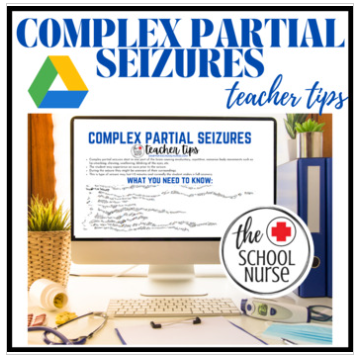
Complex Partial Seizures

This Teacher Tips digital health card provides a general overview of  Complex Partial Seizures. There are 10 editable "What You Need To Know" Teacher Tips. The  "What You Need To Know" area of the card is editable too, so you can include more or less information as needed.


OTHER RESOURCES


Check out these other popular DOASN blog posts & product links.