Saturday, March 29, 2025

Supporting Students with Seizures in the School Setting

Seizures in the School Setting:

Information for New School Nurses

+ This post contains affiliate links. +


During the 2025-2026 school year, I responded to two grand mal seizures just 24 hours apart.

Before I arrived, my staff had already begun implementing the student's Seizure Action Plan because they knew exactly what to do.

That's the goal. Good seizure preparedness isn't just about what the school nurse knows—it's about making sure everyone is prepared before an emergency happens. - Elisabeth The School Nurse LLC

Seizures can be one of the most intimidating emergencies school nurses encounter, especially when you're new to the role. The good news is that preparation makes all the difference.

By developing strong systems, educating school staff, reviewing Seizure Action Plans, and using evidence-based resources, you'll be well prepared to support students safely and confidently.

According to the Epilepsy Foundation: 

"Epilepsy is not a rare disorder, 1 in 26 people will develop epilepsy during their lifetime. It can occur on its own or alongside other health conditions of the brain. What happens during a seizure may look different depending on who is experiencing them. However, seizures are usually stereotypic, which means the same things or behaviors tend to occur in a person each time they have a seizure." 

 Understanding Seizures and How They Affect Students

Students with seizure disorders may experience different types of seizures, from brief episodes to more complex situations. It’s important to recognize the signs and know how to provide support. When a seizure occurs, your calm, quick response will set the tone for the entire school community. Staff and students often mirror the school nurse’s reaction, so staying composed will help reassure everyone involved.

Know the Seizure Action Plan

Each student with a seizure disorder should have a Seizure Action Plan in place. This plan outlines what steps to take during a seizure, including emergency medications, whether emergency services should be contacted, and how to ensure the student’s safety. Review plans regularly. 

Review each student's Seizure Action Plan before the school year begins and anytime changes are made. The more familiar you are with the plan before an emergency occurs, the more confidently you'll respond.

If a Seizure Action Plan is not in place, follow your school's policy and procedure guidelines to respond appropriately.

Educate School Staff

Teachers and staff may not have the same medical knowledge as you. As a school nurse, part of your role is to educate them on what to do during a seizure, how to keep the student safe, and how to call for additional help. Consider providing brief refresher training each school year—even for experienced staff.

General Seizure First Aid – Stay, Safe, Side
  • Stay with the student and time the seizure.
  • Safe – Keep the area clear of hazards.
  • Side – If possible, turn them on their side for safety.
(If a seizure lasts more than 5 minutes, follow the Seizure Action Plan or call emergency services.)

State-Specific Laws and Policies

It’s also important to be aware of state-specific laws and policies that may impact how schools manage seizure disorders. For example, in Illinois, the Seizure Smart School Act requires schools to have Seizure Action Plans for students with epilepsy. It also mandates that schools designate "Delegated Care Aides" who are trained to assist in implementing these plans, ensuring that students receive the appropriate care and support they need during a seizure. Be sure to review your state’s specific laws to ensure compliance and best practices.

Don't Reinvent the Wheel

When educating staff, there's no need to reinvent the wheel. Many districts already have seizure protocols in place. You can also use reliable online resources to save time while ensuring your school staff is well-prepared. Here are a few helpful options:

You don't have to create every seizure resource yourself. Many excellent organizations have already developed evidence-based training materials, action plans, and staff education resources. 

By using these resources, you’ll ensure staff are informed and prepared to support students with seizures in a timely and effective way.

Supporting Students Beyond the Seizure

A seizure lasts minutes—but supporting a student lasts all school year.

As school nurses, we help students succeed by:

• reviewing Seizure Action Plans

• educating school staff

• coordinating emergency medications

• communicating with families and healthcare providers

• promoting inclusion and reducing stigma

• helping students safely participate in school activities

That feels more like your current writing style.

Closing Thoughts

Every school nurse hopes they never have to respond to a seizure emergency—but every school nurse should be prepared.

Preparation begins before the first seizure occurs by building strong systems, educating staff, reviewing Seizure Action Plans, and using trusted resources.

The more prepared you are today, the more confidently you'll respond tomorrow.

 Check out these other popular DOASN blog posts & product links.
SEIZURE DISORDER  HEALTH CONCERN LABELS

The School Nurse’s Guide to Setting and Keeping Professional Boundaries

+ This post contains affiliate links +


Tips to Setting & Keeping Professional Boundaries for School Nurses

One of the biggest lessons I've learned over the years is that being a great school nurse doesn't mean saying "yes" to everything.

Early in my career, I wanted to help everyone. If someone asked, I said yes. If there was another task that needed to be done, I tried to fit it in. Like many school nurses, I thought working harder was the answer.

Over time, I realized something important.

Setting professional boundaries isn't about doing less. It's about protecting your time, energy, and clinical judgment so you can continue providing excellent care to the students who need you most.

Healthy boundaries don't make you less caring—they help you build a long, rewarding career in school nursing.

5 Key Tips for Setting and Keeping Professional Boundaries

1. Know Your Role

  • Make sure staff and administration understand your role as a school nurse.

  • Set expectations on what falls within your scope of practice—and what doesn’t.

  • Politely redirect requests that don’t align with your responsibilities.

Too often, school nurses are expected to take on extra tasks simply because they’re available. Clearly communicating your role helps prevent being pulled into non-nursing duties.

2. Protect Your Time

  • Establish clear working hours and avoid responding to emails or calls outside of them.

  • Let staff know when and how they should contact you for non-urgent matters.

  • Take your breaks and lunch—your time to recharge is just as important as anyone else’s.

Many school nurses struggle with stepping away, but setting limits on your availability is crucial. If you’re always available, people will always expect you to be.

3. Learn to Say No (Without Feeling Guilty!)

  • Recognize that saying no doesn’t make you unhelpful—it makes you more effective.

  • Use professional but firm language when declining extra responsibilities.

  • Offer alternative solutions if appropriate, like directing someone to the right resource.

Saying no is often uncomfortable, especially in a school setting where teamwork is key. But protecting your time and energy ensures you can focus on the students who need you most.

4. Protect Your Emotional Energy

  • Be mindful of becoming too personally involved in student or staff issues.

  • Keep your interactions professional and avoid taking on emotional burdens that aren’t yours to carry.

  • Protect student privacy by following FERPA and HIPAA guidelines.

It’s natural to care deeply about your students, but setting emotional boundaries prevents compassion fatigue. You can support students while still maintaining a healthy separation.

5. Advocate for Yourself

  • Speak up when your workload becomes unrealistic.

  • Request policy support from administration regarding boundaries.

  • Connect with other school nurses for guidance and encouragement.

Remember, advocating for yourself isn't selfish—it's one of the best ways to protect the future of school nursing in your building. 


Final Thoughts: Boundaries Help You Thrive

Looking back over my career, I can honestly say that some of the best decisions I made weren't about becoming a better clinician—they were about learning to protect my time, my energy, and my role as a school nurse.

You don't have to solve every problem.

You don't have to carry every burden.

And you certainly don't have to do everything alone.

The students who need you tomorrow also need you to take care of yourself today.

Healthy boundaries aren't a luxury—they're part of becoming a successful school nurse.

More DOASN blog posts about professional boundaries:

Discover essential self-care strategies for school nurses, including stress management, work-life balance, and setting healthy professional boundaries


 Check out these other popular DOASN blog posts & product links.


Saturday, March 15, 2025

Why School Nurses Need To Be Invited

Pull Up a Chair: Learning How To Invite Yourself to the Table

+ This post contains affiliate links. +


As a school nurse, you are the healthcare expert in your building. You see students daily for everything from minor injuries to chronic illness management, mental health concerns, and social-emotional struggles. But despite your expertise and firsthand knowledge, you may find yourself left out of important conversations about student health and well-being. If you’re waiting for an invitation to join these discussions—you might be waiting a long time. It’s time to learn how to get your invitation and pull up your own chair.

Why You Need to Be at the Table

School nurses play a vital role in student well-being, yet they’re often left out of important conversations simply because others don’t realize the depth of their expertise. By advocating for a seat at the table, school nurses can break down silos, strengthen collaboration, and ultimately provide better care for students. If you wait for an invitation, you might miss the chance to make a real impact! Learning to pull up your own chair ensures that the health perspective—especially in areas like mental health, safety, and student support—is represented.

Many school-based committees and initiatives focus on student health, safety, and well-being, yet school nurses are often overlooked when these groups are formed. Whether it’s a suicide prevention team, a student support committee, a truancy meeting, or a crisis response team, your input is critical. You are uniquely positioned to recognize patterns that others may miss, such as students with frequent somatic complaints tied to anxiety or those showing signs of self-harm. You understand how health conditions impact learning and can bridge the gap between medical and educational needs.

By inviting yourself to these conversations, you:

  • Prioritize student health – Your perspective is essential in discussions on mental health, safety protocols, and emergency preparedness.

  • Strengthen collaboration – Working alongside teachers, counselors, and administrators helps create a more comprehensive support system for students.

  • Advocate for your role – The more visibility you have, the more others will understand the depth of your expertise and the importance of school nursing.

  • Improve student outcomes – Your voice can shape policies and interventions that directly impact student health and success.


How to Invite Yourself

If you discover a team, committee, or initiative that aligns with your role and passion, take the initiative to join. Here’s how you can approach it in a way that feels natural and professional:

1. Express Interest with Curiosity

Instead of focusing on why you weren’t invited, frame it as wanting to support the initiative:

"I recently learned about the suicide prevention group, and I think it’s such an important initiative. As the school nurse, I’d love to contribute and collaborate. I often see students who may be struggling—whether through frequent health office visits for stress-related symptoms, signs of self-injury, or other concerns that are shared with me. I’d love to support the team’s efforts. Would it be possible to receive calendar invites for future meetings so I can join?"

"I had an idea that might help give us a more complete picture of the students going through the MTSS process—adding some input from the nurse’s office to the problem-solving form. Things like known medical conditions, a quick summary of nurse visits, or participation in programs like XXX could really help us understand the bigger picture and how it impacts their school experience. Let me know what you think. Thanks so much!"

"I’d love to join the truancy meetings to help provide insight from the health office. I often see students whose absences are linked to health concerns—chronic conditions, anxiety, or other barriers that may not be immediately obvious. Including this perspective could help us better support them. Would it be possible to be added to the meetings? Let me know what you think—I'm happy to chat more!" 

2. Highlight Your Unique Role

You bring a different (and valuable) perspective:

  • You see students with physical complaints that may actually be rooted in emotional distress.

  • You often have private, one-on-one conversations with students who may not open up to teachers or counselors.

  • You can help identify patterns in health office visits that might indicate a student is struggling.

3. Keep It About the Students

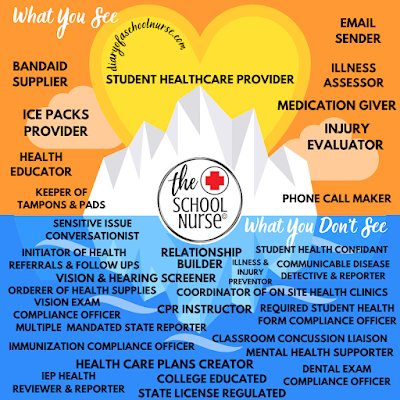
People don’t know what they don’t know, and that includes understanding the full scope of a school nurse’s role. Many assume we’re just here for bumps, bruises and daily meds, without realizing that we’re trained to assess both physical and mental health concerns, recognize patterns in student behavior, and provide critical input on issues like attendance, chronic illness, and mental health. Because of this, school nurses are sometimes unintentionally left out of important discussions—not out of intentional exclusion, but simply because others don’t realize the depth of our expertise.

It’s completely natural to feel a little hurt when you realize you weren’t included in a team or meeting that aligns with your role. But instead of dwelling on the oversight, it helps to frame your involvement around how you can support students. A simple, proactive approach—like expressing interest, highlighting your unique perspective, and emphasizing collaboration—can open doors. In most cases, once others understand what you bring to the table, they’ll welcome your participation.

This shift in mindset not only helps you gain a seat at the table but also strengthens your presence as a key player in student support teams. If you wait for an invitation, you might miss the chance to make a real impact!

Don’t Wait for Permission

Too often, school nurses hesitate to step forward because they assume they need an invitation or worry about stepping on toes. But advocating for yourself isn’t about pushing in—it’s about making sure that student health is not an afterthought. Schools function best when all key stakeholders are involved, and school nurses are absolutely key stakeholders.

If you see a seat missing at the table, don’t be afraid to pull up your own chair. Your students will be better for it, and so will your school community.


 Check out these other popular DOASN blog posts & product links.