Showing posts sorted by relevance for query health requirements. Sort by date Show all posts

Tuesday, March 9, 2021

Student Health Requirements

School Health Requirements

+some affiliate links used+


Helpful School Nurse Tip: Did you know that school nurses are responsible for making sure their students have met the compliance for the health requirements required by their state?

What health forms are required for school?

One of your first responsibilities as a school nurse will be collecting, reviewing, and tracking your students' required health forms. Depending on your state, these may include physical examinations, immunization records, vision and hearing screenings, dental examinations, sports physicals, and other required documentation.

At first, it can feel like a lot.

The good news? Every experienced school nurse has learned this process one step at a time—and you will too.

One of the first things I recommend is becoming familiar with your state's school health requirements. Every state has different laws, forms, deadlines, and exclusion requirements, so it's important to know what applies where you work.

A great place to begin is with your:

  • State Department of Health
  • State Department of Education
  • State School Nurse Organization
  • School district's health services handbook or procedures

Most of the required health forms are completed by a licensed healthcare provider before being submitted to the school. But why are these records so important?

History of School Health Forms

Since the early days of school nursing, one of our responsibilities has been helping ensure students are healthy, safe, and ready to learn. Collecting and reviewing required health forms may not be the most exciting part of the job, but it's one of the most important.

These records help identify students with chronic health conditions, verify required screenings and immunizations, and ensure students receive the care and accommodations they need throughout the school year.

Why are health forms required for school?

Parents and students often ask why these forms are necessary.

The short answer is simple: they help protect both individual students and the entire school community.

State laws and local school policies establish health requirements to help prevent the spread of communicable diseases, identify health concerns early, and ensure students are healthy enough to participate safely in school activities.

These requirements also provide school nurses with the information they need to plan care, coordinate services, and respond appropriately when health concerns arise.

Handling Non-Compliance

If families don't submit required forms, it's important to have a clear follow-up process. This might include reminder letters, phone calls, or working with school administrators to ensure compliance.

Always follow your district's procedures, as requirements and exclusion policies vary from state to state. Taking time to understand your school's expectations early in the year will help make the process much smoother.

Staying Organized with Required School Health Forms

Find out your state’s specific requirements and create a plan to track compliance. For me, that means using a Google Sheet alongside Skyward reports. I also keep non-compliant health charts in a labeled plastic banker’s box for quick access.

What works for one nurse might not work for another—try different systems until you find what fits your style and your school’s needs. Pre-COVID, I consistently reached 100% compliance; the pandemic has complicated things, but persistence is key.

  Check out this DOASN blog post on organizing school health charts HERE.

Protecting Confidentiality

Remember to protect student health information by following HIPAA and FERPA guidelines. Keep records secure and only share health information with authorized staff or parents.

Tip for Efficiency

One of the biggest time-savers I've discovered is using Google Email Templates for routine communication with families. Instead of writing the same emails over and over again, I simply customize a saved template and send it.

Collaboration Is Key

You don't have to do it all yourself.

Building strong relationships with your office staff, administrators, attendance team, counselors, teachers, and families can make collecting health forms much easier. School nursing is truly a team effort, and working together often leads to better outcomes for everyone. 


New to School Nursing?

If you're just getting started, this article is actually one chapter in a much bigger picture.

The Ten Hot Topics: New School Nurse Guide brings together ten of the most common topics new school nurses encounter during their first year, including:

✔ Student health requirements
✔ Office visits
✔ Medications
✔ Communication
✔ Health screenings
✔ Organization
✔ Emergencies
✔ Special services
…and more.

Instead of searching for answers one topic at a time, you'll have practical guidance and direct links to additional resources all in one place.

👉 Learn More About the New School Nurse Guide

Discover why vaccinations are crucial for student health, disease prevention, and educational continuity. Vaccinations are critical for safety health


ILLINOIS REFERENCES:

Illinois General Assembly (Full Article)

https://ilga.gov/legislation/ilcs/fulltext.asp?DocName=010500050K27-8.1


Illinois General Assembly Codes (Child Health Examination Code, 77 Ill. Adm. Code 665)  https://www.ilga.gov/commission/jcar/admincode/077/07700665sections.html


Illinois State Board of Education: Health Requirements

https://www.isbe.net/Pages/Health-Requirements-Student-Health-Data.aspx


Each state has rules listing the minimum health requirements students must meet in order to attend school. Try searching your state + school health requirements to locate your specific state school health requirements.


OTHER REFERENCES:

2015 DOASN Lillian Wald Blog Post: http://diaryofaschoolnurse.blogspot.com/search?q=lillian+wald


Complete List of Department of State Health Websites: https://www.cdc.gov/publichealthgateway/healthdirectories/healthdepartments.html


Lillian Wald - Henry Street Settlement https://www.henrystreet.org/about/our-history/lillian-wald/


NASN School Health Documentation https://www.nasn.org/nasn/nasn-resources/professional-topics/school-health-documentation


NCSL State Vaccination Policies: Requirements and Exemptions for Entering School https://www.ncsl.org/research/health/state-vaccination-policies-requirements-and-exemptions-for-entering-school.aspx


Schools & Health: Our Nation's Investment https://www.ncbi.nlm.nih.gov/books/NBK232693/


State School Nurse Associations

https://www.nasn.org/nasn/about-nasn/affiliates


 Check out these other popular DOASN blog posts & product links.


Sunday, August 8, 2021

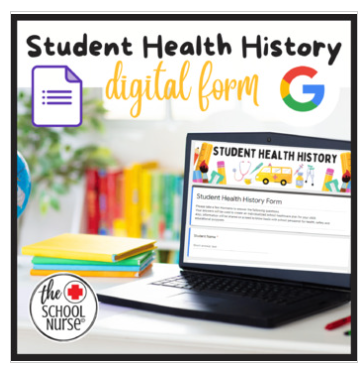
Digital Student Health History Form


Digital Health History Form for Students

+ this post contains affiliate links+


Digital Health History Form for Students

Keeping student health information up to date is an important part of school nursing practice. Knowing your students' current health conditions can help you plan for their needs, identify students who may need an Individualized Healthcare Plan (IHP) or Emergency Action Plan (EAP), and provide appropriate care throughout the school day.

A digital student health history form can provide an easy and organized way for parents and guardians to share updated health information with the school nurse.

Health History Purpose

The purpose of this digital student health history form is to provide an easier, yet formal way, for the school nurse to gather (collect data) on medical conditions for current students. Although this digital form is 100% editable, it currently offers parents a way to inform the nurse of the following:

  • Current health concerns
  • Explanation of the health concern
  • Description of how the health concerns impacts the student's school day
  • Requested accommodations the might benefit the student throughout the school day
  • Doctor contact information

As you can see, this digital health history form provides parents a chance to subjectively provide the school nurse with an overview of their child's current health conditions. The school nurse can then ask for needed / required follow up information from the student's parents and/or physician.


How To Collect A Student Health History

Have you ever had a parent call with an important health update—or had a student casually mention something you didn't previously know?

Those conversations can provide valuable information, but having updated health information documented in writing can make follow-up much easier.

A digital health history form can be shared with families at the beginning of the school year, during registration, when a student enrolls, or anytime a student's health status changes.

If you're using a Google Form, remember to review your notification and response settings so you have a reliable process for knowing when new information has been submitted.

After reviewing a response, follow up with the family as needed to:

  • Clarify health information
  • Request additional medical documentation or healthcare provider orders
  • Discuss school accommodations or supports
  • Determine whether an IHP, EAP, 504 Plan, or other documentation may be appropriate
  • Discuss how relevant health information will be communicated to appropriate school staff


Why a Health History Is Important

Accurate student health histories are important. Knowing what to do with that information is even more important.

Digital Health Records

Many schools use electronic student information systems to maintain student records. Determine how health information should be documented within your district's system and whether health conditions can be entered, tracked, and reported.

Taking the time to maintain accurate records throughout the year can make reviewing student needs—and preparing end-of-year reports—much easier.

Health Condition Lists

Many moons ago, I created Excel spreadsheets to track student health concerns because that was the best option I had!

Thankfully, today's student information systems often make this much easier. Depending on your system, you may be able to generate reports by health condition, grade level, graduation year, teacher, or other criteria.

These reports can help you understand the health needs within your school population and provide valuable data when preparing reports for administrators, supervisors, or your school board.

Individualized Healthcare Plans

Information gathered through a health history can help identify students who may need an Individualized Healthcare Plan (IHP)

Review each student's individual needs along with your district policies, state requirements, nursing standards, and professional nursing judgment when determining appropriate health planning and documentation.

Emergency Action Plans

Students with health conditions that have the potential to become a medical emergency during the school day may require an Emergency Action Plan (EAP).

The health history can help identify students who need additional follow-up with their parent/guardian and healthcare provider to ensure appropriate emergency plans, orders, medications, and supplies are available at school.

Medication Forms

Knowing which medications a student takes can help the school nurse understand the bigger picture of the student's health.

If medication needs to be administered during school hours, follow your state requirements and district policies regarding healthcare provider orders, parent/guardian authorization, medication documentation, and administration.

Nursing Procedures

Health history information may also identify students who require nursing procedures during the school day, such as tube feedings, catheterization, suctioning, dressing changes, or other skilled nursing care.

Follow applicable state requirements, district policies, provider orders, and nursing standards when developing an appropriate plan of care for these students.

One Form Can Be the Starting Point

A student health history form doesn't replace nursing assessment or individualized follow-up. Instead, it gives the school nurse a starting point.

The information families provide can help you identify students who need additional assessment, documentation, healthcare provider orders, emergency planning, accommodations, or other school health support.

And having a consistent system for collecting that information can make the process much more manageable—especially at the beginning of a busy school year.

Looking for an easier way to collect student health information?

My editable Digital Student Health History Form can be customized for your school and shared electronically with families.


ILLINOIS SCHOOL NURSE REFERENCES:

Illinois General Assembly (Full Article)
Illinois General Assembly Codes (Child Health Examination Code, 77 Ill. Adm. Code 665) https://www.ilga.gov/.../admincode/077/07700665sections.html
Illinois State Board of Education: Health Requirements
Each state has rules listing the minimum health requirements students must meet in order to attend school. 
Try searching your state + school health requirements to locate your specific state school health requirements.

OTHER SCHOOL NURSE REFERENCES:

2015 DOASN Lillian Wald Blog Post: http://diaryofaschoolnurse.blogspot.com/search...
Complete List of Department of State Health Websites: https://www.cdc.gov/.../healthdire.../healthdepartments.html
Lillian Wald - Henry Street Settlement https://www.henrystreet.org/about/our-history/lillian-wald/
NCSL State Vaccination Policies: Requirements and Exemptions for Entering School https://www.ncsl.org/.../state-vaccination-policies...
Schools & Health: Our Nation's Investment https://www.ncbi.nlm.nih.gov/books/NBK232693/
State School Nurse Associations


Tuesday, June 21, 2022

The School Nurse and Student Health Screenings

Health Screenings in the School Setting

Understanding Mandatory Health Screenings vs. State-Required Health Forms: What Every School Nurse Should Know

+ this post contains affiliate links +


Helpful School Nurse Tip: As a school nurse, understanding health requirements is key to keeping your students healthy and ready to learn. But did you know that mandatory health screenings and state-required health forms serve different purposes and both are essential?

What’s the Difference?
Mandatory health screenings are designed to catch potential health issues early (like vision or hearing problems) that could affect a student’s ability to learn and thrive. These screenings focus on early detection and timely intervention.

On the other hand, state-required health forms—such as physical exams, immunization records, and medication authorizations—are linked to school attendance regulations. They ensure that students meet public health guidelines, helping to protect the entire school community.

Since requirements vary by state, it’s important for school nurses to stay informed about the specific mandates for their students. This knowledge not only helps maintain compliance but also supports the overall health and success of every child.

Communication Is Key
Effectively communicating with families about these screenings and forms is vital. Clear, compassionate conversations help parents understand why these requirements matter and encourage timely completion. Plus, building trust through consistent messaging can make a big difference in student health outcomes.

Where to Find Information
There isn’t one universal resource that covers every state’s specific mandates. However, a good place to start is the National Association of School Nurses (NASN) or each state’s Department of Education or Health Department website. 

If so, look at the Department of Public Health site for your state, then search for something general such as "school health requirements"; these search results will hopefully lead you in the right direction.  Or send a message or search the site of your state's school nurse consultant- search the list HERE!

Examples of Common Health Screenings in Schools:

  • Vision Screenings

  • Hearing Screenings

  • Scoliosis Screenings

  • Dental Screenings

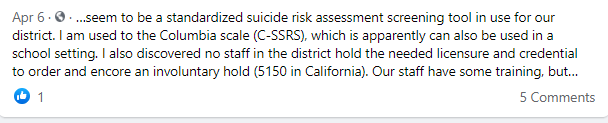
  • Mental Health & Behavioral Screenings

  • Hunger Screenings

  • BMI Screenings

  • Lead Exposure Screenings

School nurses are uniquely positioned to provide these screenings and make referrals for follow-up care, especially considering that about 40% of children attending school have chronic health conditions (CDC, 2019).

Illinois Student Health Screening Requirements

For example, in Illinois:

  • Vision Screenings
    "Vision screening must be provided annually for preschool children 3 years of age or older in any public or private educational program or licensed child care facility, and for school age children in kindergarten, second and eighth grades; are in special education class; have been referred by a teacher; or are transfer students." IDPH, 06/21/2022
  • Hearing Screenings 
"Hearing screening must be provided annually for preschool children 3 years of age or older in any public or private educational program or licensed child care facility, and for all school age children grades kindergarten, first, second and third; are in special education class; have been referred by a teacher; or are transfer students.  These screening services shall be provided in all public, private, and parochial schools." IDPH, 06/21/2022

If you’re a school nurse outside Illinois, I’d love to hear what your state requires! Feel free to share in the comments or reach out for support.

Staying Organized
Tracking compliance can feel overwhelming, but having a plan makes a big difference. I use a combination of digital tools like Skyward and simple paper filing systems to keep everything accessible. Find what works for you and keep refining it.

Check out the image below for examples of vision and hearing screening forms I use in my practice.


Student Health Screenings

Facebook Conversations for School Nurses by School Nurses

+ click pictures to be redirected to Fb conversations +


RESOURCES

Pure Med Central-  

New to School Nursing?

If you're just beginning your school nursing journey, keeping track of state health requirements, screenings, immunizations, and health forms can feel overwhelming.

That's exactly why I created Ten Hot Topics for New School Nurses.

This practical guide highlights ten important topics every new school nurse should explore during their first year, along with thoughtful questions to ask during orientation and direct links to helpful Diary of a School Nurse blog posts for deeper learning.

Rather than trying to learn everything at once, you'll have a roadmap to help you build confidence one topic at a time.

✔️ School-specific questions to ask

✔️ District and state health requirements

✔️ Organization tips

✔️ Professional growth resources

✔️ Direct links to additional blog posts and helpful references

If you're looking for a simple place to start, this guide was created just for you.

👉 Learn More About the Ten Hot Topics Guide