Thursday, January 29, 2015

Are you 'HI'- high?

Type 1 Diabetes in the School Setting

 ~ this post contains affiliate links ~


School Nurse Tip: This post gives school nurses a few suggestions on how to be prepared to deal with Type 1 Diabetes in the school setting.

Are you high?

This was found floating around on Pinterest.

Have you seen it?


I'm sure we've all said that at one time or another to a student with diabetes! Then, as soon as the words leave your mouth, there is a student or staff member who looks at the both of you with the above expression!  Makes me giggle :)

This year only three of my students are diagnosed with Type 1 Diabetes. They are all able to independently care for their needs. However, they know (and their parents know) that the nurses are always available to them as needed and especially in an emergency situation. 

School Nurse Office Organization Stations

I have found having a well organized office makes life in the nurse's office easier!


One of the ways I organize the health  center is by grouping like items together.  Here are a few ways we've organized our diabetes supplies in order to make our office space work better for us:


T1D Suggestions from The School Nurse

  1. Keep Hypo Supplies Handy: Display the standing orders for hypoglycemia and the treatment supplies together in an easy-to-reach spot.
  2. Use Updated Forms: Make sure you're using the latest district DDMP (Diabetes Medical Management Plan) and 504 Plan documents.
  3. Organize Care Plans: Group the completed forms in a folder labeled "Diabetes Care Plans." Stamp with COPY and file / scan original.
  4. Daily Access: Store the "Diabetes Care Plans" in a 3 ring binder or folder, or in our daily med binder or scan and save. Attach a copy of each student's plan to their chart. (We use old-school 5x8 index cards for charting daily visits—works for us!)
  5. Personal Supply Baskets: Give each student a basket for their diabetes supplies, which they can keep on a designated shelf or refrigerator in the office.
  6. Convenient Testing Area: Have an clean, separate place in an area for supervision designated as the blood sugar testing area. Make sure the sharps container is here too.
  7. Sharps Disposal Plan: Arrange with the local fire department to dispose of full sharps containers as needed throughout the school year.
  8. Communicate: Follow your district guidelines as far as communicated your student's health needs with their teachers. Consider attaching a diabetes digital information card to an email or within your student electronic management system.


Join either group or both groups by answering all membership questions.

These are just a handful of ways I try to make my work life more organized and easier!
What are some of the things you've done? 
I would love to hear from you!

Check out these T1D digital forms; all available on TPT!

https://www.teacherspayteachers.com/Store/The-School-Nurse/Category/Diabetes-524814


 Check out these other popular DOASN blog posts & product links.

 TYPE 1 DIABETES

Friday, May 9, 2014

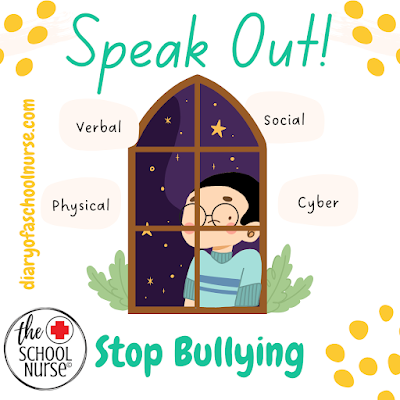
Bullying & Physical Complaints of Students

BULLYING in SHOOLS

 + this post contains affiliate links +


Hopefully Helpful School Nurse Tip:  Do you think some of  your student's complaints can be related to a bullying issue? Sometimes students have psychosomatic issues and they don't realize why. Pay attention- this might be happening to one of your students too.

As a school nurse, you might be one of the first school employees to suspect or learn about an act of bullying.


Bullying which results in physical injuries can be some of the most obvious attacks.  
However, many forms of bullying cause emotional  and other health related complaints. The health related symptoms (psychosomatic symptoms) can go unrecognized for a long period of time until they are related to a bullying situation.

Health related complaints caused from bullying include, but are not limited to:

  • stomach aches
  • fatigue
  • nausea
  • sore muscles
  • headaches
  • depression
  • anxiety
  • shortness of breath
  • dizziness
  • tiredness
  • drug/alcohol use/abuse
  • back pain
  • abdominal pain
  • loss of appetite
Many times it is easier for students to ask to see the school nurse for these or similar complaints. If  you are the school nurse who realizes one of your students is being bullied then read on to see how you can help.


As a school nurse YOU CAN HELP!

1. Gather Information or Get School Admin to Gather Info:  Collaborate with other school employees (administration) to determine if the situation qualifies as a form of bullying (physical, verbal, cyber, social).

2. Be Supportive: Support the student being bullied and support all bystanders while the school administrators properly address the student bully according to school policy.

3. Educate: Help educate students and staff on bullying, prevention, and responding.


These steps are outlined in greater detail on the Stop Bullying website!.

List of online (anti)bullying resources:


Wednesday, April 9, 2014

How can school nurse properly dispose of full sharps containers?

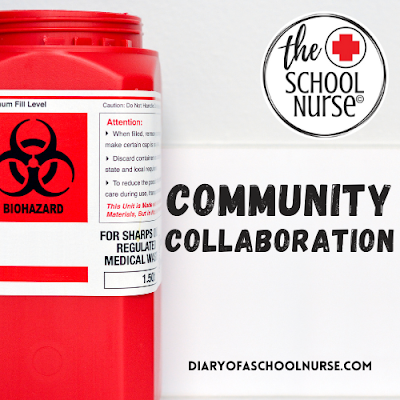
COMMUNITY COLLABORATION

+this post contains an affiliate link+


Helpful School Nurse Tip: One of the best ways to strengthen your school health program isn't always by increasing your budget—it's by building relationships within your community. Many local organizations are eager to support schools through donations, services, educational programs, and partnerships. The key is simply asking and building those relationships over time. One example? Our local fire department.

A Simple Community Partnership

When I first started at my school, the district spent hundreds of dollars each year disposing of full sharps containers. Those costs added up quickly and took away from the limited budget available for student health supplies.

About seven years ago, I reached out to our local fire department to see if they would be willing to dispose of one full sharps container each year at no cost to the district.

Thankfully, they agreed—and they've continued to provide this valuable service ever since.

That one conversation not only saved our school district money, but it also strengthened an already positive relationship with our local firefighters, EMTs, and paramedics.

It's a great reminder that sometimes the best solutions come from simply asking.


Think Beyond Your Budget

Community partnerships aren't just about saving money.

They can also provide:

  • Student and staff education
  • Health screenings
  • Guest speakers
  • Emergency preparedness training
  • Donated supplies
  • Volunteer opportunities
  • Professional expertise
  • Family support services

Sometimes the greatest value isn't financial—it's knowing who to call when someone needs help.

Community Partners to Consider

Every community is different, but here are a few organizations worth getting to know:

  • Fire Department
  • EMS
  • Local hospitals and healthcare systems
  • Health Department
  • Lions Club
  • Dental clinics
  • Vision providers
  • Food pantries
  • Mental health agencies
  • Public libraries
  • Community foundations
  • Local businesses
  • American Heart Association
  • American Lung Association
  • American Red Cross

For family resources, don't overlook 211.org. It connects families with local assistance for food, housing, utilities, mental health services, transportation, childcare, and many other community programs. You can learn more by visiting 211.org.

You don't have to build every partnership overnight.

Start With One Conversation

Building community partnerships doesn't happen overnight.

Start with one conversation.

Reach out to a local organization, introduce yourself, explain your role, and look for opportunities to work together.

You might be surprised how many people are eager to support your students and your school.

I'd Love to Hear From You!

What community partnerships have made a difference in your school?

Have you found a creative way to save money, provide additional services, or connect families with helpful resources?

I'd love to hear your ideas in the comments!


Having a great working relationship with your local fire department and EMT service is good- Saving your school district money is even better!


Grab some other community networking ideas with this online, anytime continuing education course!


Check out these other popular DOASN blog posts & links.