Showing posts with label office visits. Show all posts

Sunday, October 27, 2024

How School Nurses Can Use Data to Advocate for Their Impact

Beyond Band-Aids™: Why School Nurse Data Matters

+ This post contains affiliate links. +


Helpful School Nurse Tip: If you're like many school nurses, you've probably been asked, "How many students did you see today?" While it's a simple question, it's also an opportunity to showcase the true impact of your work. By tracking meaningful data, you can move beyond simply answering that question and begin telling the full story behind the numbers.

Your Work Deserves to Be Seen

One of the most important lessons I've learned during my school nursing career is this:

Your work deserves to be seen.

School nurses do far more than hand out Band-Aids and ice packs. Every health assessment, medication administered, health screening completed, parent phone call, care plan developed, emergency response, health education lesson, and conversation with a student contributes to the health and success of the entire school community.

The challenge?

Much of that work happens quietly behind the scenes.

Meaningful data helps make that work visible.


Why School Nurse Data Matters

Tracking data isn't about creating more paperwork.

It's about helping others understand the value of school nursing.

Meaningful data helps make your work:

Visible
People begin to understand everything that happens inside the health office—not just the student visits they happen to see.

Validating
The numbers support what you've known all along: school nurses have a significant impact on student health, attendance, and academic success.

Valued
When administrators and school boards can clearly see your impact, it's much easier to advocate for staffing, supplies, equipment, and additional support.


Data Doesn't Have to Be Difficult

One mistake many school nurses make is believing they need to track everything.

You don't.

Start small.

Choose a few meaningful data points that are already part of your daily routine. As your system becomes more comfortable, you can always add more later.

Remember...

A simple system you'll actually use is far better than a complicated system you'll eventually abandon.


Start With What You're Already Doing

You may already be collecting more information than you realize.

Consider tracking:

  • Student visits
  • Medication administrations
  • Health screenings
  • Parent phone calls
  • Care plans created or updated
  • Emergency responses
  • Chronic health conditions
  • Classroom health education
  • Staff trainings
  • Referrals to outside providers

You don't have to start from scratch. Build on the systems you already use every day.

Tell the Story Behind the Numbers

Numbers alone are helpful.

Stories make those numbers meaningful.

Instead of reporting:

8,500 student visits

consider also sharing:

  • What were the most common reasons students visited the health office?
  • What trends did you notice throughout the year?
  • How many students returned to class after treatment?
  • How many emergency responses occurred?
  • How many students were identified during screenings and referred for follow-up care?
  • What percentage of your student population received nursing services?

Those details help administrators understand the impact behind the numbers.

Build a System That Works for You

There isn't one perfect system.

The best system is the one you'll actually use consistently.

Over the years, my own workflow has evolved. Today I use a combination of Google tools, Skyward reports, and Canva to organize data and create an annual report that tells the story of our school health office.

Whether you prefer Google Forms, Google Sheets, Skyward reports, spreadsheets, or paper logs, consistency matters more than complexity.

Ready to Get Started?

If you're ready to begin collecting meaningful data, here are a few resources I've created to help simplify the process:

Each resource is designed to help you spend less time worrying about numbers—and more time telling the story of your impact.


Final Thoughts

At the end of the day, data isn't about proving how busy you are.

It's about demonstrating the difference you make and sharing the story behind your numbers.

Because every medication administered, every health screening completed, every emergency managed, every family supported, and every student who returns to class healthier and ready to learn deserves to be counted.

Your work deserves to be seen.

Want to Dive Deeper?

These concepts were explored in greater detail in Beyond Band-Aids™: School Nurse Data Made Simple, a continuing education course created specifically for school nurses.

If you're interested in future live trainings, practical resources, and ongoing professional development, be sure to explore GROUNDS FOR GROWTH™—a membership community designed to support school nurses throughout their careers.


 Check out these other popular DOASN blog posts & product links.


Sunday, December 3, 2023

When To Visit The School Nurse

The Ten B's | When To Visit The School Nurse

+ This post contains affiliate links. +


Helpful School Nurse Tip: One of the best ways to reduce unnecessary health office visits is to teach students when they really need to see the school nurse.

A question I hear from school nurses is: 

"How do I teach students when they really need to come to the health office?" 

The answer often starts before students ever become sick or injured.

Teaching students what constitutes a true nurse visit—and what can wait—helps reduce unnecessary visits while building health literacy and independence.

That's exactly why I wrote The Ten B's: When to Visit the School Nurse.

School Nurses Are Bringing the Book to Life

Recently, fellow school nurse Bridget of The School Nurse Says shared how she dressed as Lina Rogers, America's first school nurse, and read The Ten B's to her preschool students for School Nurse Day.

Seeing another school nurse use the book in such a creative way reminded me why I wrote it in the first place—to help school nurses connect with students while teaching important health concepts in a fun, memorable way.

Whether you're reading to one student, an entire classroom, or introducing yourself at the beginning of the school year, The Ten B's is designed to spark conversations about healthy choices and appropriate nurse visits.

Check out The School Nurse Says reel and follow her on Ig!

The Ten B's : When To Visit The School Nurse

What's Inside?

Each page introduces a different reason a student might need to visit the school nurse.

🐝 Blood Sugar

🐝 Bad Breathing

🐝 Broken Bones

🐝 Burning Up

🐝 Big Bump

🐝 Barfing

🐝 Bowel Issues

🐝 Bleeding

🐝 Bee Stings

🐝 Believable

The colorful illustrations and simple rhyming format make it easy for elementary students to understand—and fun to read aloud.

Many school nurses also use individual pages as introductions to classroom health lessons throughout the year.

Why "Believable" Matters

"Believable" is often the page that generates the most discussion—and for good reason.

It isn't about accusing students of pretending to be sick.

It's about encouraging staff to use professional judgment before automatically sending every student to the health office.

If a student says they don't feel well but they're laughing with friends, trying to avoid a test, or asking to leave class at the same time every day, it's okay to pause, observe, and check in.

Instead of immediately asking,

"Do they want to see the nurse?"

consider asking,

"Does this seem like something that truly requires nursing care right now?"

That simple shift can help reduce unnecessary visits while ensuring students with genuine health concerns receive timely care.

More Than a Storybook

I hope The Ten B's becomes more than just another children's book on your shelf.

I hope it becomes a classroom conversation starter, a relationship builder, and a fun way to help students understand when—and why—they should visit the school nurse.

After all, some of the best health education happens long before a student ever walks through the health office door.

Learn more or purchase The Ten B's: When To Visit The School Nurse here.


Within each category list, you'll find book recommendations. 


 Check out these other popular DOASN blog posts & product links.


Related DOASN Blog Link | HERE


Tuesday, June 21, 2022

School Nurse Office Visits? Routines, Passes, and a Little Bit of Calendly Magic

 Student Office Visits to the Nurse's Office

+ this post contains affiliate links +

One thing you can count on as a school nurse- students will show up at your door! That daily routine is a big part of the job.
But how they get to your office? That’s where boundaries come in. Setting a few simple expectations helps keep things running smoothly and makes sure everyone gets what they need (including you).


Hopefully Helpful School Nurse Tip: If you know me, you know I don’t love change. However, if you work with me, then you know I’m always changing things! Don’t be afraid of change—be willing to try new things. Something might work better than you expected.

I don't like change yet I'm always changing.

How Do Students Visit The Nurse's Office

The majority of a school nurse’s day revolves around meeting students’ health needs. One of the first systems you’ll need to establish is how students are expected to visit your office. Over the years, I’ve tried many different approaches to manage office traffic and support student access to care.

Here are the main methods we use in my office:

Ways Students Visit the Nurse’s Office

  • Teacher pass – This is the most common method and works well for non-urgent needs.  (sample passes here)

  • Walk-in – Students may walk in if it’s an open time or they have urgent needs.

  • Phone call or email from teacher – Staff may call to see if space/time is available, but I've received emails from students too!

  • Scheduled appointment – Yes, we actually allow students to book a nurse’s appointment!

Why Appointments Work for Us

We started using Calendly during the 2021–2022 school year after noticing our school counselors were already using it. Because staff and students were familiar with it, the transition was smooth.

Scheduling appointments helps students articulate their health concerns and build independence- two skills that are essential for high schoolers.

Here are a few key Calendly points (IMO):

Key Calendly Benefits:

  • Free version available (we use it!)

  • User-friendly interface

  • Syncs with Google Calendar (our IT department created a dedicated Google account for this)

  • Flexible settings – We allow 5-minute appointments, include 5-minute buffer time, and limit scheduling to 5 days in advance.

  • Custom questions – Students select the reason for their visit and preferred outcome (dropdown options).

  • Reduces unnecessary visits – Some issues can be handled via email, keeping students in class.

  • Appointment prioritization – We still accept walk-ins but prioritize students with appointments.

  • Custom scheduling blocks – I block out time for lunch, meetings, or days off.

  • Data tracking – Helpful for end-of-year reports.

We’re still discovering ways to make the most of Calendly—but it’s already been a game-changer for managing visit flow.

Charting Student Visits and Medications

In addition to using Calendly and some paper charting, we use Skyward  for documenting medication inventory and administration. Since the 2022–2023 school year, we’ve also been documenting basic office visits in Skyward instead of using our former Google form (another change!)

This change has improved our reporting accuracy and made our end-of-year Board of Education (BOE) report easier to compile. If you’re tracking visits and meds separately, consider combining your documentation into one system if your district allows it.


With all that said, I know some school nurses- and even teachers- use a Google Form to request nurse office visits. It’s a great option for Google-based schools, especially when it comes to tracking and triage. You can easily edit the form above to fit this type of use, too!


When Should Students Be Sent to the Nurse?

Clear communication with staff is essential to reduce unnecessary disruptions and ensure timely care. At the beginning of each semester, I email a brochure to all staff with:

  • A welcome message and contact info
  • How to view their students with chronic health conditions in Skyward
  • The types of services we provide (urgent, non-urgent, grab-n-go table)
  • School attendance guidelines
  • Links to staff education for managing chronic conditions (e.g., asthma, seizures, diabetes, allergies)
  • An invitation to stop by the nurse’s office to meet our team

The below brochure was created for use with parents, but it is editable & you could probably switch things up a bit for use with staff & students!

Whether you're new or experienced, setting clear routines for nurse office visits can help your day run smoother and ensure students get the care they need. Don’t be afraid to try something new—you might just love the change!


For more ideas you can read these popular conversations
with The School Nurse public FB group!

School Nurse Suggestions 

by School Nurses for School Nurses


After student office visits, the next thing to think about is charting of those office visits! Read about my system HERE.


Check out these other popular DOASN blog posts & links.


Tuesday, November 1, 2011

Embrace the Frequent Flyer

FFP : Frequent Flyer Program

+this post contains affiliate links+


Helpful School Nurse Tip:  Yes, even in the school setting you will encounter frequent flyers. Learn to embrace them early on- you'll thank yourself later!

Embracing the Frequent Flyer

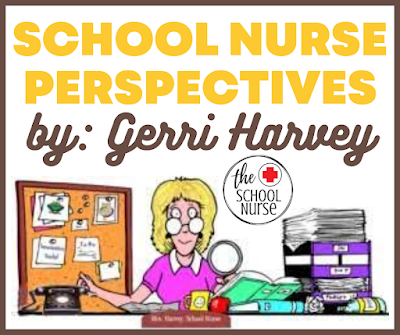
Embracing the “frequent flyer” is a conscious goal of mine every school year. And every year, I’m reminded of an article I read a long time ago- one that stuck with me and still shapes how I approach these visits. It was written by the original school nurse blogger (and my personal inspiration), Gerri Harvey.

Gerri had a detailed and one-of-a-kind website called School Nurse Perspectives. It was packed with everyday tips and real-world insights that spoke directly to the heart of our work. I read her posts over and over again. Though Gerri has since retired- and retired her blog- I’m lucky to still keep in touch with her through the gift of social media. Her wisdom continues to inspire me both professionally and personally.

One of Gerri’s posts that never left me was about “frequent flyers.” She reminded us that there’s always something more behind these visits. I believe that wholeheartedly.


What Gerri Said

On her blog, Gerri talked about those students we often call "frequent flyers"—the ones who show up day after day. She reminded school nurses that there’s almost always something more going on beneath the surface. I believe that too. After all these years, I’ve seen it time and time again.

Frequent Flyer Goal

With Gerri’s reminder in mind, try looking at your frequent flyers through a different lens. Instead of feeling frustrated when Student Idee shows up again, pause and ask yourself: What’s bringing them here today?

Is there an unmet need they’re trying to meet by coming to your office so often? Maybe it’s comfort, connection, or just a few quiet minutes in a safe space. When you take the time to build trust and relationships, you’ll start to uncover what they really need—and why they keep returning.

So here’s the challenge: learn to welcome those visits. You might just surprise yourself and miss them when they stop visiting so often.