Hopefully Helpful School Nurse Tip:National School Day is a day to celebrate yourself and your hard work. It is also a great time to educate your students & staff on all of your responsibilities. Use this free digital or printable card to celebrate with your favorite school nurse co-workers and friends!
I find it hard to put into written words how challenging being a school nurse
over the last 12 plus months of been. How many of you feel the same way?
I hope you know how important your job is, has been, and will always be.
Happy National School Nurse Day!
This is a revised poem I received years ago from a former coworker turned friend.
I think it would make a great gift for your favorite school nurse friend too.
It prints as a 5x7& would look pretty amazing in any of these frames found on Amazon:
Helpful School Nurse Tip: Did you know that school nurses are responsible for making sure their students have met the compliance for the health requirements required by their state?
What health forms are required for school?
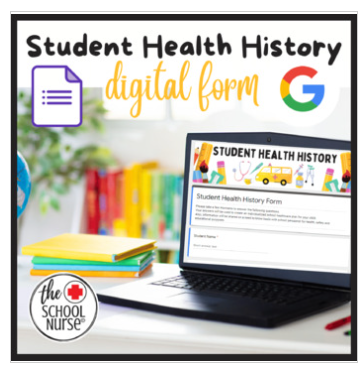
One of your first responsibilities as a school nurse will be collecting, reviewing, and tracking your students' required health forms. Depending on your state, these may include physical examinations, immunization records, vision and hearing screenings, dental examinations, sports physicals, and other required documentation.
At first, it can feel like a lot.
The good news? Every experienced school nurse has learned this process one step at a time—and you will too.
One of the first things I recommend is becoming familiar with your state's school health requirements. Every state has different laws, forms, deadlines, and exclusion requirements, so it's important to know what applies where you work.
A great place to begin is with your:
State Department of Health
State Department of Education
State School Nurse Organization
School district's health services handbook or procedures
Most of the required health forms are completed by a licensed healthcare provider before being submitted to the school. But why are these records so important?
History of School Health Forms
Since the early days of school nursing, one of our responsibilities has been helping ensure students are healthy, safe, and ready to learn. Collecting and reviewing required health forms may not be the most exciting part of the job, but it's one of the most important.
These records help identify students with chronic health conditions, verify required screenings and immunizations, and ensure students receive the care and accommodations they need throughout the school year.
Why are health forms required for school?
Parents and students often ask why these forms are necessary.
The short answer is simple: they help protect both individual students and the entire school community.
State laws and local school policies establish health requirements to help prevent the spread of communicable diseases, identify health concerns early, and ensure students are healthy enough to participate safely in school activities.
These requirements also provide school nurses with the information they need to plan care, coordinate services, and respond appropriately when health concerns arise.
Handling Non-Compliance
If families don't submit required forms, it's important to have a clear follow-up process. This might include reminder letters, phone calls, or working with school administrators to ensure compliance.
Always follow your district's procedures, as requirements and exclusion policies vary from state to state. Taking time to understand your school's expectations early in the year will help make the process much smoother.
Staying Organized with Required School Health Forms
Find out your state’s specific requirements and create a plan to track compliance. For me, that means using a Google Sheet alongside Skyward reports. I also keep non-compliant health charts in a labeled plastic banker’s box for quick access.
What works for one nurse might not work for another—try different systems until you find what fits your style and your school’s needs. Pre-COVID, I consistently reached 100% compliance; the pandemic has complicated things, but persistence is key.
Remember to protect student health information by following HIPAA and FERPA guidelines. Keep records secure and only share health information with authorized staff or parents.
Tip for Efficiency
One of the biggest time-savers I've discovered is using Google Email Templates for routine communication with families. Instead of writing the same emails over and over again, I simply customize a saved template and send it.
Collaboration Is Key
You don't have to do it all yourself.
Building strong relationships with your office staff, administrators, attendance team, counselors, teachers, and families can make collecting health forms much easier. School nursing is truly a team effort, and working together often leads to better outcomes for everyone.
New to School Nursing?
If you're just getting started, this article is actually one chapter in a much bigger picture.
The Ten Hot Topics: New School Nurse Guide brings together ten of the most common topics new school nurses encounter during their first year, including:
✔ Student health requirements
✔ Office visits
✔ Medications
✔ Communication
✔ Health screenings
✔ Organization
✔ Emergencies
✔ Special services
…and more.
Instead of searching for answers one topic at a time, you'll have practical guidance and direct links to additional resources all in one place.
Each state has rules listing the minimum health requirements students must meet in order to attend school.Try searching your state + school health requirements to locate your specific state school health requirements.
Hopefully Helpful School Nurse Tip:As a school nurse, knowing how to communicate with teachers is just as important as knowing what to communicate. Use these digital Teacher Tips to keep school staff informed about a variety of health needs in the school setting. Get organized today—you’ll thank yourself tomorrow!
Digital Teacher Tips for School Nurses: Simplify Communication and Educate Staff
But first, let me introduce Teachers Pay Teachers (TPT)- one of the most popular online marketplaces with educational resources for teachers and other school staff.
What is Teachers Pay Teachers (TpT)?
Teachers Pay Teachers (TpT) is one of the most popular online marketplaces for educational resources. While it was initially created for teachers, it has become a valuable resource for anyone working in a school. TpT offers thousands of affordable, thoughtful, and useful resources available with just a few clicks.
Most items are priced less than a cup of coffee, making it an accessible tool for school staff. Learn more about TpT Most are available for less than a cup of your favorite coffee. Learn more about the Teachers Pay Teachers marketplace HERE.
Products created and used by an actual school nurse!
The School Nurse has been part of the TpT marketplace since May 2014. My goal has always been to share digital products with other school nurses to make their day-to-day routines easier and more consistent across students. Initially, my products were PDF-based, but now most items are available as Google Drive files since my school—like many others—uses Google for almost everything.
The products in The School Nurse TpT store are the same ones I use in my own practice. Of course, I’ve edited out specific school or student details, but the concepts are transferable between schools and states. Even better, the items are editable, so you can adapt them to meet your specific needs. What works for me might be the jumping-off point you need to tackle your next task!
Digital health information cards were one of the very first products created and posted for sale within The School Nurse TpT Store! Today there are many updated versions of the originals AND many now have editable portions too!
Why Use Teacher Tips Digital Health Information Cards?
One of the roles of a school nurse is to educate teachers and staff about medical conditions they may encounter in the classroom. As the medical expert in the school setting, you have knowledge that others may not, and Teacher Tips cards help bridge that gap.
Teacher Tips cards provide:
Broad health information about a specific condition.
An invitation for staff to ask follow-up questions if they need more details.
A consistent communication tool to educate multiple teachers quickly and effectively.
Teacher Tips cardsempower teachers with the knowledge they need to better support their students while freeing up your time for other responsibilities.
Way back when, I used to print information sheets and hand deliver them to teachers or put them inside their teacher mailbox; I’m dating myself, right?! Now, I include these digital Teacher Tips Health Information Cards within the body of an email message to teachers and/or add them as an IHP attachment in Skyward for a specific student.
Email Communication
The easiest way to share Teacher Tips cards is through email. Since the cards offer broad health information, you can:
Include student-specific details directly in the email body.
Attach the student’s 504 Plan or reference it for more specific information.
Skyward Integration
If your school uses Skyward Student Management, take advantage of its Health module to upload Teacher Tips cards:
Open the student’s profile in Skyward.
Navigate to the Health tab.
Select the IHP (Individualized Healthcare Plan) section and click “Add File.”
Download the Teacher Tips card as a PDF and attach it.
Use the comment box to include additional student-specific details or information you want teachers to know.
This is an excellent tool for grade levels where schedules change frequently, such as middle or high school. Don’t forget to utilize the Health Condition tab in Skyward, too (sign up here for more info on the topic of Skyward!).
Benefits of Teacher Tips Cards
Digital Teacher Tips cards:
Save time by streamlining communication.
Ensure consistency in how health information is shared with staff.
Empower teachers to better understand and support students with chronic health conditions.
Provide editable templates so you can customize the information to your school’s needs.
Closing Thoughts
The items in my TpT store are designed to make life as a school nurse a little easier. They help ensure consistency, save time, and provide valuable tools for educating staff. If there’s a specific health concern or school nursing task you’d like to see turned into a digital resource, drop a comment! Your feedback helps me create products that truly meet the needs of school nurses everywhere.




).png "wondering about student school health requirements in schools; especially illinois schools? this blog post will define student health requirements.")