Showing posts sorted by date for query epi pen. Sort by relevance Show all posts

Wednesday, December 25, 2024

HIPAA, FERPA, and Teaching Staff About Health: A School Nurse’s Guide

HIPAA vs. FERPA

Understanding Student Privacy in School Nursing

+ This post contains affiliate links. +

Helpful School Nurse Tip: One of the most common questions new school nurses ask is, "Can I share this information?" Understanding the differences between HIPAA and FERPA will help you answer that question with confidence. Although the two laws are often confused, knowing which one applies can make communicating with staff, families, and healthcare providers much easier.


Remember, I'm not an attorney or legal expert and this is not official legal advice. This information is intended for educational purposes only. Please consult with your school district for all of their definitions, policies/procedures, & guidelines.

HIPAA vs. FERPA: The Basics

If you’re wondering where HIPAA ends and FERPA begins, you’re not alone. Here’s a quick breakdown:

What Is HIPAA?

The Health Insurance Portability and Accountability Act (HIPAA) ensures the privacy of patient health information (PHI) in healthcare settings. It’s what doctors, hospitals, and insurance providers follow to keep patient information secure.

In a school setting, HIPAA may apply if you work with outside healthcare providers, like a student’s pediatrician or therapist.

Think About Who Needs to Know

As school nurses, we often ask ourselves:

  • Does this staff member need this information to keep the student safe?
  • Am I sharing only the information necessary?
  • Is this information being shared with someone who has a legitimate educational interest?

Keeping those three questions in mind can help guide many everyday conversations.

What Is FERPA?

The Family Educational Rights and Privacy Act (FERPA) protects educational records, including health-related information maintained by the school. These records can include IEPs, 504 plans, school physical exams and immunization records.

FERPA governs how schools collect, share, and store student information. Unlike HIPAA, it’s designed specifically for educational institutions.

Key Differences Between HIPAA and FERPA

  • HIPAA applies to healthcare providers.
  • FERPA applies to schools and educational records.
  • Example: If a student’s doctor faxes you a medication order, that’s HIPAA. Once the order becomes part of the student’s school record, it’s governed by FERPA.

Sometimes, these laws intersect. For instance, if you need to share a student’s health information with an outside provider, you may need consent from the parent/guardian to comply with both HIPAA and FERPA. Always check your district’s policies for specific guidance.


What About Sharing Health Conditions With Teaching School Staff?

FERPA allows the sharing of student health information with school staff on a "need-to-know" basis if it is necessary for them to perform their job duties and ensure the safety or well-being of the student. Here’s a bit more detail:

FERPA and Sharing Health Information

  • Permissible Sharing: FERPA permits school nurses and administrators to share student health information with teachers, aides, and other school staff who need the information to support the student effectively. For example, sharing a diabetes action plan with a teacher who supervises lunchtime would be appropriate.
  • Parental Consent: In most cases, schools do not need explicit parental consent to share information internally for legitimate educational interests, such as maintaining safety or providing necessary care.
  • Minimum Necessary Information: FERPA encourages sharing only the information necessary for the staff member to perform their role. For example, you might tell a bus driver that a student has severe asthma and what to do in case of an attack, without divulging unrelated medical history.

Emergency Situations

FERPA also provides more flexibility in emergencies. If a student’s health or safety is at immediate risk, you can share relevant information with those who can help, including external parties like first responders.


In General Everyday Situations

One of the most impactful parts of your role is helping teachers and staff understand student health needs of any student in general. What seems like simple knowledge to you, might be new information for someone outside of the health field. Here are a few tips to make those conversations effective:

1. Start With the Basics

Explain the health condition in simple terms. Focus on what staff need to know, like:

  • Common symptoms.
  • Triggers to avoid.
  • Immediate steps to take during an emergency.

For example, when teaching about asthma, highlight signs of an asthma attack and demonstrate how to use an inhaler or spacer if necessary.

2. Create Handy Resources

Quick-reference guides or infographics can be lifesavers for busy staff. Consider including:

These resources should be easy to understand and accessible in classrooms, staff lounges, or online portals.

3. Use Real-Life Scenarios

Bring learning to life by sharing real-world examples. Role-playing scenarios, like responding to a student’s allergic reaction and using a trainer epi-pen, can help staff feel prepared and confident.

4. Respect Confidentiality

Remind staff to keep student health information private. Share only what is necessary to provide safe care. For example, instead of saying, “Jasmine has diabetes,” you can teach, “If a student has low blood sugar, offer a snack like juice or crackers.”

Common Situations School Nurses Face

You might encounter questions like:

  • A teacher asks why a student leaves class every day.
  • A coach wants to know if an athlete has asthma.
  • A substitute teacher asks about a student's seizure disorder.
  • A cafeteria worker asks about food allergies.

Each situation may require sharing some information—but usually not every detail. Sharing only what's necessary helps protect student privacy while keeping students safe.

Bringing It All Together

As a school nurse, you’re the bridge between student health and education. Understanding the basics of HIPAA and FERPA helps you protect privacy, while teaching staff about health conditions ensures students receive safe, informed care.

By creating a supportive environment with clear communication and resources, you’re setting everyone up for success.

FINAL THOUGHTS

No school nurse memorizes every FERPA or HIPAA situation.

When you're unsure, pause, review your district's policies, and don't hesitate to ask questions.

Protecting student privacy while supporting student safety is something you'll become more comfortable with over time—and every conversation helps build your confidence.


 Check out these other popular DOASN blog posts & product links.


Thursday, July 29, 2021

FREE EPI PENS FOR SCHOOLS!

Back To School : FREE Epi Pens

+ this post contains affiliate links +


Every school nurse should be prepared to respond to an allergic reaction—whether the student has a known allergy or not. As you prepare for a new school year, here are several important steps to help keep students safe.

Obtain (FREE) Undesignated Epinephrine

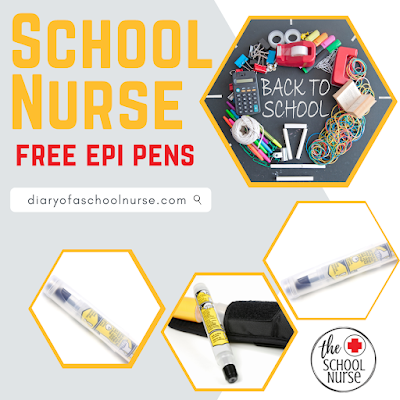
If you've been reading this blog for a while then you already know that Mylan Pharmaceuticals  & BioRidge Pharma offer 2 two packs of  FREE epi pens, replenishment epi-pens, and epi-pen trainers to qualifying schools each calendar year! I've been taking advantage of this program for many, many years and saving my school districts many, many dollars too! 

To say this is a wonderful and valuable service is an understatement. 

This is a potentially LIFE SAVING offer they continue to provide for FREE!

As with most undesignated prescription medication offers, there is required paperwork, but it is very self explanatory and easy to complete.  FYI- you will need to have your school district physician or a local physician willing to sign an order or provide a standing order.  

Having epinephrine at each school could literally save the life of a student, staff member, or visitor.  You can read all about their program & apply for your free doses HERE.  

I'm curious if there are any school nurses reading this post who have needed to use one of the free epi-pens at some point throughout a school year?  If so, please comment so the rest of us can learn from your experience. 

I'm also curious if there are any school nurses reading this post who live in a state with undesignated emergency medication laws who also have a state health department who provides the physician orders for those medications?  If so, please comment your state.   

ALLERGY EDUCATATION & PLAN

You will also want to spend some time thinking about how you will educate your staff members and maybe even the other students in your school.  The following is a list of questions that you should have answers to... these questions might even help you think of more questions that you'll need answers to.
  1. Who needs to know how and when to use an epi-pen.
  2. How will those people be taught signs/symptoms and medication administration techniques?
  3. Does your school district require a medication form or action plan?
  4. Who needs to know which students have potentially life threatening allergies?
  5. How are students with severe allergies identified? 
  6. Do students have permission to carry their own emergency medications?
  7. How will you gather more information from the parents? View this easy to use & editable digital Health History form HERE.
  8. ... and many more questions depending on your school/s and school district


Preparing Your School Team

Once you've gathered the necessary medical orders and met with the family, it's time to prepare your school team. Every school is different, but taking a few minutes to develop a plan before the first day of school can help everyone respond quickly and confidently during an allergic emergency.

Consider questions like these as you prepare for the school year:

  • Who needs to know about this student's allergy?
  • Who should be trained to recognize the signs and symptoms of an allergic reaction?
  • Who will be responsible for administering epinephrine if you're unavailable?
  • Does your district require an Allergy Action Plan, Individualized Healthcare Plan (IHP), or medication authorization form?
  • Will the student self-carry their emergency medication?
  • How will substitute teachers receive important health information?
  • What is the plan for field trips, after-school activities, and athletic events?
  • How will emergency medications be stored so they are quickly accessible?
  • How will you communicate important allergy information to staff while protecting student privacy?

Every student, school, and district is a little different, so use these questions as a starting point when developing your own systems.

Questions to Ask Parents Before School Starts

Parents are the experts on their child. While the Allergy Action Plan provides the healthcare provider's medical orders, a conversation with the parent or guardian often provides valuable information that isn't written on the form.

Consider asking questions such as:

✔ Tell me about your child's allergy. When was it first diagnosed?

✔ Has your child ever experienced anaphylaxis?

✔ Has your child ever needed an EpiPen?

✔ What symptoms usually appear first when your child is having an allergic reaction?

✔ Does your child recognize when they're beginning to have a reaction?

✔ Does your child self-carry emergency medication?

✔ Are there any classroom, cafeteria, or transportation concerns I should know about?

✔ What accommodations have worked well in previous schools?

✔ What would you like me to know before the first day of school?

Helpful Tip

The best allergy care happens when school nurses, families, students, and healthcare providers work together. Parents are the experts on their child, while the student's Allergy Action Plan provides the medical orders that guide care at school. Use your first conversation to build trust, learn about the student's individual needs, and always provide care according to the student's current healthcare provider orders.

School Staff Health Concern Notifications

Every school nurse develops communication systems that work for their building. Personally, I rely on email and Skyward to make sure those who "need to know" have the information they need. 

I always invite staff to stop by my office, call, or email with specific questions they might have too.  Teacher Tips digital cards are how I notify teachers and this is my how to guide- if it works for you that is great, if not then just take the pieces that work and switch up the rest.

Why Staff Communication Matters

As nurses, we often take our knowledge for granted and might even assume that others we work with understand or have a similar knowledge base regarding certain health conditions.


However, as school nurses, we are often viewed as the medical expert within the school setting. One of the roles of a school nurse is to educate others we work with so they understand what they need to know about certain medical conditions. Does that make sense?


Teacher Tips cards provide an opportunity to educate others within the school on a specific health condition. These teacher tips give broad information on a health condition and invite school staff to ask you for specific details as needed.


HOW TO NOTIFY TEAHCERS & STAFF


Way back when, I used to print information sheets and hand deliver them to teachers or put them inside their teacher mailbox; I’m dating myself, right?!  Now, I include these digital Teacher Tips digital health information cards within the body of an email message to teachers and/or add them as an IHP attachment in Skyward for a specific student.


EMAIL:  Since the Teacher Tips cards offer broad information, I have the option of including more student specific details within the body of the email; information staff would need to know. I can also include a copy of the 504 Plan or ask teachers to reference the 504 Plan for even more specific information. 


SKYWARD: Use Skyward to your advantage! If you have access to the Skyward Health module then consider uploading the teacher tips cards within the Health tab of Skyward Student Management.  How you wonder? Follow these steps:

  1. Open the student screen within the Health tab of the Skyward Student Management System
  2. Select IHP
  3. Then “Add File”
  4. Enter a form description and then Choose the Teacher Tips file you want to attach (download as a PDF from Google prior to attaching in Skyward)
  5. Use the Comment box to add student specific information or more detailed information you want to the teacher to be aware of.
This is an excellent communication tool and resource between you and the teachers; especially at the 6-8 or 9-12 grade levels when student schedules change mid year or without notice. Make sure you utilize the Health Condition tab in Skyward too (great information for another blog post!)

The Teachers Pay Teachers items discussed in this blog post are items I actual use- or very close variations of those items! These items are created and designed to offer consistency when working with multiple students and sometimes at multiple schools.


SCHOOL NURSE RESOURCES


HEALTH CONCERN LABELSSEVERE ALLERGYASTHMA                                              

Monday, January 18, 2021

EMERGENCY BAG UPDATE

SCHOOL NURSE EMERGENCY BAG UPDATE!

+ this post contains affiliate links +


Helpful School Nurse Tip: School health emergencies are never scheduled. The question isn't if one will happen—it's when. Taking time now to prepare your emergency supplies can make all the difference when every second counts.

My school nurse emergency bag is not actually a bag at all-

it is a BOX!


Updated School Nurse Emergency Box

For years I've wanted to update this post, and I finally took a few minutes to photograph my current emergency setup.

One surprise?

My "emergency bag" isn't actually a bag at all—it's a labeled storage box, along with a red backpack that holds our AED.

You might be thinking,

"Isn't carrying a box awkward?"

Honestly... a little!

But I've found that having everything organized, labeled, and easy to locate is worth the tradeoff. During an emergency, I don't want to waste valuable time searching for supplies.

Another unexpected bonus? The box fits perfectly on the seat of a wheelchair, which I typically take with me when responding to emergencies.

Every school nurse develops a system that works for them. This one has worked well for me for years.

What should be in a School Nurse Emergency Kit?

Every school and every district is different, so use this list as inspiration rather than a checklist. Your emergency supplies should reflect your district's policies, standing orders, available medications, and the unique needs of your student population.

I keep my emergency box on a shelf in my office so it's always ready to grab and go.

Inside, I organize supplies by category using inexpensive plastic pencil boxes with simple paper labels—no fancy label maker required! I also keep copies of any student-specific Emergency Action Plans tucked inside the appropriate supply boxes for quick reference if needed.

School Nurse Emergency Box Contents

Here's what I currently carry:


Items Also Taken:

AED inside a Red Backpack similar to this one


Before the Emergency Happens...

Having the right supplies is only part of being prepared.

Take a few minutes to think through what happens before, during, and after an emergency occurs at your school.

Ask yourself:

  • How will I be notified of an emergency?
  • Who else responds, and what are their responsibilities?
  • What happens in my health office while I'm away?
  • Who calls 911 if needed?
  • Who contacts the student's family?
  • Who documents the incident and updates attendance?
  • Where are our emergency medications and AEDs located?

Running through these scenarios ahead of time can help you respond more confidently when an emergency does occur.

Know Your Policies

Many of the emergency medications and supplies listed above require standing orders or must follow district-specific policies.

Be sure you understand your state's Nurse Practice Act, your district's procedures, and any standing orders that apply to your role before adding medications to your emergency kit.

Hang tight for another update—in about eight years or so!   

Looking for More Emergency Bag Ideas?

This isn't my first emergency bag post!

You can also check out these posts:


New to School Nursing?

Emergency preparedness is just one of many skills you'll develop during your first year as a school nurse. This article is one of the topics featured in my Ten Hot Topics: New School Nurse Guide, a practical resource designed to help new school nurses build confidence during their first year.

Inside you'll find guidance on ten of the most common topics school nurses encounter, including:

✔ Student office visits
✔ Emergency preparedness
✔ Student health requirements
✔ Communication
✔ Medications
✔ Health screenings
✔ Organization
✔ Special services
…and more.

If you're just getting started in school nursing, this guide brings everything together in one convenient resource with practical tips and direct links to additional articles and tools.

👉 Learn more about the Ten Hot Topics: New School Nurse Guide


Check out these other popular DOASN blog posts & links.


Tuesday, September 18, 2012

Emergency Bag for School Nurses

Are you ready for a health emergency?

+ this post contains affiliate links +


Hopefully Helpful School Nurse Tip: This is my #1 read DOASN blog post of all time. I think it is because school nurses want to be prepared for a health emergency within their school building. Read this post to see what I keep in my medical grab n go bag.

The School Nurse Background


I've worked in 4 schools (2 JR Highs and 2 High Schools- currently at a high school)
and health emergencies tend to be similar regardless of what school I am in!
 
A staff member uses a 'call button' or phone to call the office responsible
for all emergencies (usually the main office of the dean's office).
In a health emergency they frantically say "We need The Nurse"....
then The Nurse is called via a walkie talkie to report to Room # for an emergency.

However, 99.8% of the time I am never told what the emergency consists of!
This used to bother me because I felt as though I was walking into the unknown;
but anymore I'm OK with not knowing- I'm ready regardless of the situation.


Here are some examples of emergencies I've been called to help with over the years:
  • broken bones
  • fainting- especially after a blood drive
  • seizures
  • fights- some are sadly really bad- unconsciousness, broken bones, bleeding- paramedics called kind of bad!
  • strokes- a couple of teachers I've worked with have had strokes @ school. both fully recovered.
  • anxiety attacks
And I'm certain there are more that my memory takes for granted and I'm failing to mention now :)

 
So, I have learned to be mentally prepared to walk into anything and
I also need to have supplies with me to treat a variety of situations when I arrive.
 
To help me feel prepared I have arranged an "Emergency Bag"
always stocked and ready to 'grab n' go!' to any emergency. 
I also always bring my walkie talkie to keep in touch
with the LPN (yes, I'm spoiled!) who stays in the nurse's office
eagerly waiting my updates. She knows that no news is good news &
something I can handle without help from the outside (ie the local paramedics).
Also, the school security office (a former EMT and firefighter- spoiled again)
 meets me at the call and typically one of the deans arrives too.
 
 
The above bag was left for me to use by the nurse I replaced when she left after 14 years service! I'm not sure where she purchased it, but it works out great!
When kids or staff members see me in the halls with this on my shoulder they know I'm headed to a situation and they make room for me in the hallways-
which as you know can be really crowded sometimes!
 
 
Here is the bag unzipped- it opens all the way open and so I can see everything I have inside. And what is "everything you wonder"...Let's see-
  I am also lucky enough to have standing orders for the emergency items mentioned above!
 
As for teacher classrooms- they are offered
gloves and band aids to keep on hand (no pun intended!).
We don't have an actual classroom emergency kit at this point in time-
maybe we will make something in the future;
I'm not sure what our Safety Committee will decide.

Shop for the above items & many more on The School Nurse's Amazon store- 
www.amazon.com/shop/theschoolnurse