
Back To School : FREE Epi Pens
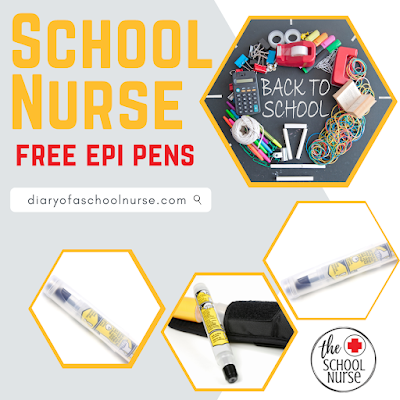
Every school nurse should be prepared to respond to an allergic reaction—whether the student has a known allergy or not. As you prepare for a new school year, here are several important steps to help keep students safe.
Obtain (FREE) Undesignated Epinephrine
To say this is a wonderful and valuable service is an understatement.
This is a potentially LIFE SAVING offer they continue to provide for FREE!

ALLERGY EDUCATATION & PLAN
- Who needs to know how and when to use an epi-pen.
- How will those people be taught signs/symptoms and medication administration techniques?
- Does your school district require a medication form or action plan?
- Who needs to know which students have potentially life threatening allergies?
- How are students with severe allergies identified?
- Do students have permission to carry their own emergency medications?
- How will you gather more information from the parents? View this easy to use & editable digital Health History form HERE.
- ... and many more questions depending on your school/s and school district
Preparing Your School Team
Once you've gathered the necessary medical orders and met with the family, it's time to prepare your school team. Every school is different, but taking a few minutes to develop a plan before the first day of school can help everyone respond quickly and confidently during an allergic emergency.
Consider questions like these as you prepare for the school year:
- Who needs to know about this student's allergy?
- Who should be trained to recognize the signs and symptoms of an allergic reaction?
- Who will be responsible for administering epinephrine if you're unavailable?
- Does your district require an Allergy Action Plan, Individualized Healthcare Plan (IHP), or medication authorization form?
- Will the student self-carry their emergency medication?
- How will substitute teachers receive important health information?
- What is the plan for field trips, after-school activities, and athletic events?
- How will emergency medications be stored so they are quickly accessible?
- How will you communicate important allergy information to staff while protecting student privacy?
Every student, school, and district is a little different, so use these questions as a starting point when developing your own systems.
Questions to Ask Parents Before School Starts
Parents are the experts on their child. While the Allergy Action Plan provides the healthcare provider's medical orders, a conversation with the parent or guardian often provides valuable information that isn't written on the form.
Consider asking questions such as:
✔ Tell me about your child's allergy. When was it first diagnosed?
✔ Has your child ever experienced anaphylaxis?
✔ Has your child ever needed an EpiPen?
✔ What symptoms usually appear first when your child is having an allergic reaction?
✔ Does your child recognize when they're beginning to have a reaction?
✔ Does your child self-carry emergency medication?
✔ Are there any classroom, cafeteria, or transportation concerns I should know about?
✔ What accommodations have worked well in previous schools?
✔ What would you like me to know before the first day of school?
Helpful Tip
The best allergy care happens when school nurses, families, students, and healthcare providers work together. Parents are the experts on their child, while the student's Allergy Action Plan provides the medical orders that guide care at school. Use your first conversation to build trust, learn about the student's individual needs, and always provide care according to the student's current healthcare provider orders.
Why Staff Communication Matters
As nurses, we often take our knowledge for granted and might even assume that others we work with understand or have a similar knowledge base regarding certain health conditions.
However, as school nurses, we are often viewed as the medical expert within the school setting. One of the roles of a school nurse is to educate others we work with so they understand what they need to know about certain medical conditions. Does that make sense?
Teacher Tips cards provide an opportunity to educate others within the school on a specific health condition. These teacher tips give broad information on a health condition and invite school staff to ask you for specific details as needed.
HOW TO NOTIFY TEAHCERS & STAFF
Way back when, I used to print information sheets and hand deliver them to teachers or put them inside their teacher mailbox; I’m dating myself, right?! Now, I include these digital Teacher Tips digital health information cards within the body of an email message to teachers and/or add them as an IHP attachment in Skyward for a specific student.

EMAIL: Since the Teacher Tips cards offer broad information, I have the option of including more student specific details within the body of the email; information staff would need to know. I can also include a copy of the 504 Plan or ask teachers to reference the 504 Plan for even more specific information.
SKYWARD: Use Skyward to your advantage! If you have access to the Skyward Health module then consider uploading the teacher tips cards within the Health tab of Skyward Student Management. How you wonder? Follow these steps:
- Open the student screen within the Health tab of the Skyward Student Management System
- Select IHP
- Then “Add File”
- Enter a form description and then Choose the Teacher Tips file you want to attach (download as a PDF from Google prior to attaching in Skyward)
- Use the Comment box to add student specific information or more detailed information you want to the teacher to be aware of.
The Teachers Pay Teachers items discussed in this blog post are items I actual use- or very close variations of those items! These items are created and designed to offer consistency when working with multiple students and sometimes at multiple schools.

SCHOOL NURSE RESOURCES




.png)


.png)


.png)
.png)


.png "How can school nurses be prepared to respond to health emergencies in the school setting? What do nurses put in their health first response kits?")


.png)
