Showing posts sorted by relevance for query medication. Sort by date Show all posts

Saturday, December 28, 2024

Managing Medications in Schools: A Guide for School Nurses

Building Medication Systems That Work

Practical Medication Management for School Nurses

+ This post contains affiliate links. +


Helpful School Nurse Tip: Medication administration can feel overwhelming when you're new to school nursing—but it gets much easier once you have good systems in place. One of the biggest lessons I've learned over the last 30 years as a school nurse is this: Don't just organize medications. Build medication systems. Strong systems save time, reduce stress, support safe practice, and help you feel more confident throughout the school day.

Medication Administration Is More Than Giving a Pill

Medication management involves much more than handing a student a medication cup.

Every day, school nurses are responsible for coordinating physician orders, obtaining parent authorizations, securely storing medications, documenting every dose, monitoring for side effects, communicating with families, preparing medications for field trips, and making sure emergency medications are ready when needed.

The more responsibilities you juggle, the more valuable a dependable system becomes.


Build Medication Systems Before You Need Them

One lesson I've learned over the years is that it's best to create medication systems before things become hectic—but also be flexible enough to adjust them as your needs change.

In my office, two nurses administer medications throughout the day. Years ago, we found ourselves asking questions like:

"Did you already give this student their medication?"

"Did this student already come down?"

"Who documented that dose?"

Those conversations happened often enough that we realized something needed to change.

When you're asking the same questions over and over, it's usually a sign that your system—not your staff—needs improvement.

We didn't need to work harder.

We needed better systems, not more stress!

Looking back, improving our systems made one of the busiest parts of our day feel much more predictable. Today, we use consistent routines for daily medications, PRN medications, emergency medications, documentation, and inventory.

They may seem simple, but together they help our office run more efficiently, reduce the risk of errors, and support safe medication administration.

Every District (and school) Will Look Different

Your medication room probably won't look exactly like mine.

Your district's policies may be different.

Your student population may be different.

Your documentation system may be different.

And that's okay.

The goal isn't to copy another nurse's office.

The goal is to build systems that make sense for your school while following your district's procedures and your state's requirements.

Small Systems Make a Big Difference

You don't have to overhaul everything overnight.

Start by improving one process at a time.

Some ideas include:

  • A consistent medication check-in routine
  • An organized system for daily medications
  • Clearly labeled PRN medications
  • Easily accessible emergency medications
  • A reliable documentation workflow
  • Regular inventory checks
  • Calendar reminders for medication expirations
  • A process for field trips and end-of-year medication pickup

Over time, those small improvements become habits—and those habits make your day much easier.

SMALL SYSTEMS   BIG IMPACT

✔ Daily Medications

✔ PRN Medications

✔ Emergency Medications

✔ Documentation

✔ Inventory

✔ Communication

Understanding Your Professional Responsibilities

Strong medication systems are only one part of safe medication administration.

School nurses must also understand the legal, ethical, and professional responsibilities that guide medication practices within their state and district.

While procedures vary across the country, there are several key concepts every school nurse should become familiar with.

School nurses function under their state's Nurse Practice Act, which defines the legal scope of practice and responsibilities for licensed nurses. Administering medications is a task that falls squarely within this scope, but it comes with specific guidelines:

  • Delegation: Nurses must understand which tasks, if any, can be delegated to unlicensed assistive personnel (UAP). State laws vary widely, but most require that the school nurse assess the situation and provide training and supervision when delegation is permitted.

  • Clinical Judgment: Nurses are responsible for assessing whether it is safe to administer a medication based on their training and the provided orders. They must also monitor for potential side effects or adverse reactions.

Understanding Scope of Practice

Medication administration falls within a school nurse's professional scope of practice, but it also requires sound clinical judgment and an understanding of your state's Nurse Practice Act.

Some important responsibilities include:

  1. Medication Orders: Most states require a written order from a licensed healthcare provider and parental consent before a school nurse can administer any medication.

  2. Storage and Handling: Nurses must follow state regulations regarding the safe storage of medications, which often include keeping them in a locked cabinet and maintaining controlled substances under stricter conditions.

  3. Documentation: Proper record-keeping is critical. Nurses must document every dose administered, including the time, dosage, and any observations or reactions.

  4. Standing Orders: Some states allow standing orders for common medications like epinephrine for anaphylaxis or albuterol for asthma emergencies. Understanding what is allowed in your state is crucial.

Free Medication Training Guide!

Understanding delegation requirements, including which tasks (if any) may be delegated to unlicensed assistive personnel (UAP) is another important topic.

Delegation laws vary by state and often require training, supervision, and ongoing evaluation.

I created a free Medication in the School Setting Training Guide to walk you through many of the basics of medication management in schools, including:

  • Policies and procedures
  • Medication forms
  • Storage
  • Administration
  • Inventory
  • Documentation
  • Helpful resources and references

Whether you're brand new to school nursing or simply looking for a refresher, I hope you find it helpful.


Key Considerations for School Nurses

  1. Training and Competence School nurses must be well-versed in administering various forms of medications, including oral, topical, inhaled, and injectable forms. They should also be trained in emergency response protocols, such as administering epinephrine or glucagon.

  2. Delegation and Supervision When delegating medication administration to UAP, the school nurse must ensure they are trained and competent to handle the task. Regular evaluations and ongoing communication are essential to maintain student safety.

  3. Parental and Provider Communication Clear communication with parents and healthcare providers is essential. Nurses often serve as liaisons, ensuring that orders are accurate, medications are provided in the original pharmacy-labeled container, and any changes are promptly updated.

  4. Emergencies and PRN Medications Nurses must be prepared to administer emergency medications like epinephrine, naloxone, or seizure rescue medications. Procedures for these situations should be clearly outlined and practiced through drills or simulations.

Common Challenges and Best Practices

  • Challenge: Students forgetting their medication at home or arriving without required documentation.

    • System: Develop clear policies and communicate expectations with families at the start of the school year. Use reminders and follow-up systems as needed.

  • Challenge: Balancing medication responsibilities with other nursing duties.

    • System: Streamline processes with electronic health record systems and standardized documentation forms.

  • Challenge: Managing medication inventory.

    • System: Follow district policies & procedures for counting, logging, and storing medications. 

Final Thoughts

Medication administration isn't about having the perfect medication cabinet. It's about creating systems that help you provide safe, consistent care for your students.

It's about creating systems that help you provide safe, consistent care for your students.

Start with one process.

Improve it.

Then build another.

Before long, you'll have medication systems you can trust—and those systems will make even the busiest school days feel more manageable.


Check out these other popular DOASN blog posts & product links.



Sunday, September 27, 2020

FREE- Medication Administration in the School Setting Training

School Nurse Training : Medication In Schools

+ this post contains affiliate links +


Hopefully Helpful School Nurse Tip: Medications at school require careful handling—from following state laws and school policies to proper storage and documentation. Training staff to assist safely is key to keeping students protected and things running smoothly.

Medication Administration in the School Setting: What You Need to Know

Administering medication at school involves more than just handing out pills. It requires strict adherence to state nurse practice acts, school policies and procedures, and careful documentation to ensure student safety and legal compliance.

  • Necessary Forms: Most districts require signed physician orders, parent/guardian consent forms, and medication administration logs. These forms serve as official authorization and track each dose given.

  • State Nurse Practice Act: Your state’s Nurse Practice Act guides what tasks can be delegated and how to safely oversee medication administration by unlicensed personnel. Be sure you are familiar with these laws to stay compliant.

  • School Policies & Procedures: Each school or district has detailed protocols regarding medication storage, administration times, emergency plans, and communication with families. Following these policies protects students and staff.

By maintaining solid policies, clear documentation, and proper training, schools can reduce medication errors and keep students safe.

Medication Training for School Staff Made Simple

As a school nurse, one of your critical roles is training unlicensed staff—whether they’re office personnel, teachers, or aides—to safely administer medications. When staff feel confident and prepared, student safety improves dramatically. That’s why having clear, straightforward, and customizable training resources is essential.

Do you have a medication training for staff?

Not long ago, someone asked if I had a school nurse resource designed specifically for medical training in the school setting. Surprisingly, I didn’t—but that didn’t last long! Now, I have not just one, but two options for you to choose from! Here’s the first...

Option One: Comprehensive Medication Training PDF


Understanding medications in the school setting can feel overwhelming, but this FREE PDF is here to help! Whether you’re a new school nurse or just looking for a solid reference, this resource breaks down key topics like policies, procedures, documentation, and more.

Since every school and district has its own guidelines, this PDF is designed to be customizable—so you can add personalized notes and details to fit your specific needs. While I am a district school nurse, I’m not your district’s nurse—but I hope this resource gets you started in the right direction!
Inside, you’ll find sections covering:

✅ Policy & Procedures
✅ Forms
✅ Medications
✅ Inventory
✅ Storage
✅ Administration
✅ Documentation
✅ Resources & References

Download it, make it your own, and let me know if you find it helpful!


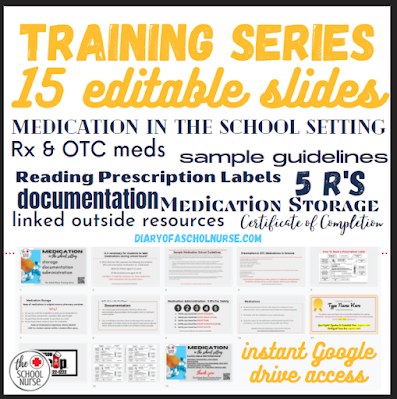
Option Two: Editable Google Slides Training Series

This FREE Google Slides training is perfect if you prefer an interactive presentation format. Ideal for school nurses who travel between buildings or districts, these slides can be tailored to your unique school policies.

The slide deck includes 15 ready-to-use slides covering:

  • Medication statistics & background

  • How to read prescription and OTC medication labels (with video!)

  • Safe storage and documentation practices

  • The “5 R’s” of medication administration

  • Printable certificates of completion for staff

  • Poison Control info and printable practice labels

  • Clickable links to additional resources

This option makes training sessions engaging and ensures staff can review the material as needed.

This Google slide training is available for FREE via Teachers Pay Teachers.


Statistics from the National Health and Nutrition Examination Survey
Sample wording for medication guidelines in the school setting
Prescription & Over-The-Counter Medications
How to read a prescription medication label
Linked video teaching how to read a prescription bottle label
Storing medications in the school setting
Documentation for medications in the school setting
The 5 R’s for safely administering medication in the school setting
Review
Printable certificate of completion
Available resources
Poison Control information
Printable practice prescription labels
Clickable resource pages

To Sum Up

Training yourself and your staff on medication administration doesn’t have to be overwhelming. With these free, flexible tools, you can deliver consistent, clear education that protects your students and empowers your team.

Additional Resources for School Nurse Medication Training


Check out these other popular DOASN blog posts & links:


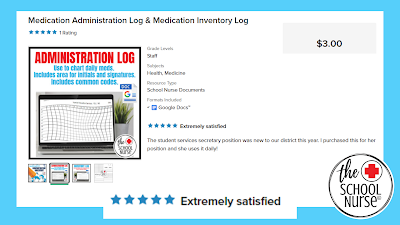
Medication Administration & Inventory Log  $3!


Thursday, July 29, 2021

FREE EPI PENS FOR SCHOOLS!

Back To School : FREE Epi Pens

+ this post contains affiliate links +


Every school nurse should be prepared to respond to an allergic reaction—whether the student has a known allergy or not. As you prepare for a new school year, here are several important steps to help keep students safe.

Obtain (FREE) Undesignated Epinephrine

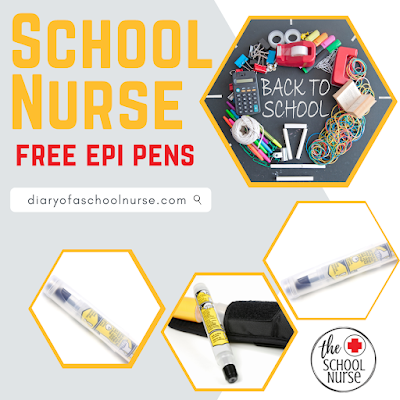
If you've been reading this blog for a while then you already know that Mylan Pharmaceuticals  & BioRidge Pharma offer 2 two packs of  FREE epi pens, replenishment epi-pens, and epi-pen trainers to qualifying schools each calendar year! I've been taking advantage of this program for many, many years and saving my school districts many, many dollars too! 

To say this is a wonderful and valuable service is an understatement. 

This is a potentially LIFE SAVING offer they continue to provide for FREE!

As with most undesignated prescription medication offers, there is required paperwork, but it is very self explanatory and easy to complete.  FYI- you will need to have your school district physician or a local physician willing to sign an order or provide a standing order.  

Having epinephrine at each school could literally save the life of a student, staff member, or visitor.  You can read all about their program & apply for your free doses HERE.  

I'm curious if there are any school nurses reading this post who have needed to use one of the free epi-pens at some point throughout a school year?  If so, please comment so the rest of us can learn from your experience. 

I'm also curious if there are any school nurses reading this post who live in a state with undesignated emergency medication laws who also have a state health department who provides the physician orders for those medications?  If so, please comment your state.   

ALLERGY EDUCATATION & PLAN

You will also want to spend some time thinking about how you will educate your staff members and maybe even the other students in your school.  The following is a list of questions that you should have answers to... these questions might even help you think of more questions that you'll need answers to.
  1. Who needs to know how and when to use an epi-pen.
  2. How will those people be taught signs/symptoms and medication administration techniques?
  3. Does your school district require a medication form or action plan?
  4. Who needs to know which students have potentially life threatening allergies?
  5. How are students with severe allergies identified? 
  6. Do students have permission to carry their own emergency medications?
  7. How will you gather more information from the parents? View this easy to use & editable digital Health History form HERE.
  8. ... and many more questions depending on your school/s and school district


Preparing Your School Team

Once you've gathered the necessary medical orders and met with the family, it's time to prepare your school team. Every school is different, but taking a few minutes to develop a plan before the first day of school can help everyone respond quickly and confidently during an allergic emergency.

Consider questions like these as you prepare for the school year:

  • Who needs to know about this student's allergy?
  • Who should be trained to recognize the signs and symptoms of an allergic reaction?
  • Who will be responsible for administering epinephrine if you're unavailable?
  • Does your district require an Allergy Action Plan, Individualized Healthcare Plan (IHP), or medication authorization form?
  • Will the student self-carry their emergency medication?
  • How will substitute teachers receive important health information?
  • What is the plan for field trips, after-school activities, and athletic events?
  • How will emergency medications be stored so they are quickly accessible?
  • How will you communicate important allergy information to staff while protecting student privacy?

Every student, school, and district is a little different, so use these questions as a starting point when developing your own systems.

Questions to Ask Parents Before School Starts

Parents are the experts on their child. While the Allergy Action Plan provides the healthcare provider's medical orders, a conversation with the parent or guardian often provides valuable information that isn't written on the form.

Consider asking questions such as:

✔ Tell me about your child's allergy. When was it first diagnosed?

✔ Has your child ever experienced anaphylaxis?

✔ Has your child ever needed an EpiPen?

✔ What symptoms usually appear first when your child is having an allergic reaction?

✔ Does your child recognize when they're beginning to have a reaction?

✔ Does your child self-carry emergency medication?

✔ Are there any classroom, cafeteria, or transportation concerns I should know about?

✔ What accommodations have worked well in previous schools?

✔ What would you like me to know before the first day of school?

Helpful Tip

The best allergy care happens when school nurses, families, students, and healthcare providers work together. Parents are the experts on their child, while the student's Allergy Action Plan provides the medical orders that guide care at school. Use your first conversation to build trust, learn about the student's individual needs, and always provide care according to the student's current healthcare provider orders.

School Staff Health Concern Notifications

Every school nurse develops communication systems that work for their building. Personally, I rely on email and Skyward to make sure those who "need to know" have the information they need. 

I always invite staff to stop by my office, call, or email with specific questions they might have too.  Teacher Tips digital cards are how I notify teachers and this is my how to guide- if it works for you that is great, if not then just take the pieces that work and switch up the rest.

Why Staff Communication Matters

As nurses, we often take our knowledge for granted and might even assume that others we work with understand or have a similar knowledge base regarding certain health conditions.


However, as school nurses, we are often viewed as the medical expert within the school setting. One of the roles of a school nurse is to educate others we work with so they understand what they need to know about certain medical conditions. Does that make sense?


Teacher Tips cards provide an opportunity to educate others within the school on a specific health condition. These teacher tips give broad information on a health condition and invite school staff to ask you for specific details as needed.


HOW TO NOTIFY TEAHCERS & STAFF


Way back when, I used to print information sheets and hand deliver them to teachers or put them inside their teacher mailbox; I’m dating myself, right?!  Now, I include these digital Teacher Tips digital health information cards within the body of an email message to teachers and/or add them as an IHP attachment in Skyward for a specific student.


EMAIL:  Since the Teacher Tips cards offer broad information, I have the option of including more student specific details within the body of the email; information staff would need to know. I can also include a copy of the 504 Plan or ask teachers to reference the 504 Plan for even more specific information. 


SKYWARD: Use Skyward to your advantage! If you have access to the Skyward Health module then consider uploading the teacher tips cards within the Health tab of Skyward Student Management.  How you wonder? Follow these steps:

  1. Open the student screen within the Health tab of the Skyward Student Management System
  2. Select IHP
  3. Then “Add File”
  4. Enter a form description and then Choose the Teacher Tips file you want to attach (download as a PDF from Google prior to attaching in Skyward)
  5. Use the Comment box to add student specific information or more detailed information you want to the teacher to be aware of.
This is an excellent communication tool and resource between you and the teachers; especially at the 6-8 or 9-12 grade levels when student schedules change mid year or without notice. Make sure you utilize the Health Condition tab in Skyward too (great information for another blog post!)

The Teachers Pay Teachers items discussed in this blog post are items I actual use- or very close variations of those items! These items are created and designed to offer consistency when working with multiple students and sometimes at multiple schools.


SCHOOL NURSE RESOURCES


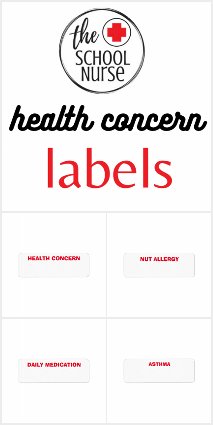
HEALTH CONCERN LABELSSEVERE ALLERGYASTHMA                                              

Wednesday, September 15, 2021

School Nurse Supply Lists

 Suggested School Nurse Supply Lists

+this post contains affiliate links+


Helpful School Nurse Tips:  Having the proper school nurse supplies and school nurse assessment tools for your job actually can make your job easier! The proper health center supplies will add to the functionality of your school nurse office. Check out the nurse's office supply lists below that were you created with the school nurse in mind. 


Online Shopping for School Nurse Office Supply Items

Having the right school nurse supplies and assessment tools can make your job easier and your office more functional. Check out the detailed supply lists for online shopping, digital resources, resource books, medication supplies, PPE, Type 1 Diabetes management, basic first aid supplies, and emergency items to streamline your workflow and enhance your preparedness.

Does your school district have a business account with Amazon? Mine does, and I love it! I order most of my school nurse office supplies from Amazon because the prices are reasonable and the shipping is FAST. On average, items arrive within three days—sometimes in just one or two days. This is great because I can order last-minute items, receive them quickly, and have time to use them before they expire.  View all of The School Nurse's shopping idea lists today.

Why reinvent the wheel? This Teachers Pay Teachers (TpT) storefront is packed with digital resources specifically designed for school nurses. Most items are editable and integrate seamlessly with Google Drive. Many school districts permit staff to buy from TpT, so check if you can purchase these valuable school nurse resources without using personal funds. There are many FREE items in The School Nurse TpT store too- take a look.


SCHOOL NURSE RESOURCE BOOKS

I love the convenience of online searches, but I also really appreciate a great resource book that I can hold in my hands. Can you relate? For school nurses, having a reliable book to reference can make a big difference in our daily routines. Whether it's a quick guide, a detailed health assessment manual, or an emergency care handbook, these tangible resources are so valuable. Check out this curated list of essential school nurse books that will help you stay on top of the latest nursing protocols and procedures.  If so, check out this list of school nurse resource books.

MEDICATION SUPPLIES

Before the pandemic, I averaged around thirty scheduled medications administered during the school day. However, throughout the pandemic, this number has significantly decreased due to various factors such as remote learning and reduced in-person attendance. Despite the drop, I always need to be prepared for the numbers to rise again as students return to regular school schedules. Ensuring that I have a well-stocked medication supply, proper documentation, and an organized administration system is crucial. It's essential to stay ready to meet the needs of students and handle any potential increase in medication administration efficiently. Check out this idea list full of useful supplies related to medications at school.  

Also, if you train any unlicensed staff to administer medication you might be interested in this- It's a free PDF guide- it's here to help. It serves as a reference that you can customize to fit your specific school and district needs. Feel free to add personalized notes and details to tailor the presentation to your audience.

Presentation Sections Include:

  • Policy & Procedures
  • Forms
  • Medications
  • Inventory
  • Storage
  • Administration
  • Documentation
  • Resources & References


TYPE 1 DIABETES

This school year (2021 - 2022), 10% of my student population has a diagnosis of Type 1 Diabetes. The majority of these students function completely independently and usually have all of their needed supplies. I might only see them if they need help with a site change, to treat a low, or a random high. Even though those students are self sufficient, the office needs to be prepared to step in when needed and have the proper supplies to meet the doctor orders listed in the Diabetes Medical Management Plans

In order to help make sure we have what they need, I keep many of the items listed in the Diabetes Idea List for School Nurses in stock in the school health center / school nurse's office. Do you too?


BASIC FIRST AID SUPPLIES

Are you even a school nurse if you don't have a favorite bandaid, thermometer, or way to make an ice pack?  Your state and your school district will determine exactly what type of first aid care you can offer your students.  You want to always protect your nursing license and make sure you are practicing within your scope and offering appropriate services. In most settings supplying a bandaid, checking a temperature, and offering an ice pack are within your scope.


Are you ready for a health emergency at school? As school nurses, we've got to be prepared for anything, anytime. Whether it's a student, staff member, or even a visitor, emergencies can pop up unexpectedly. If you're a school nurse, you've probably been there when someone needed urgent help, and if not yet, you will be—it's just part of the job. That's why having the right emergency response training, stocking up on essential first aid supplies, and having clear protocols in place are absolute musts. Explore our complete guide on school nurse emergency preparedness to make sure you're all set to handle whatever comes your way.

View DOASN blog posts related to my emergency response bag / box!


Check out these other popular DOASN blog posts & links: